



LANSING — Scientists now have evidence that yet another invasive the aquatic species — the bloody red shrimp — is established in all five Great Lakes.
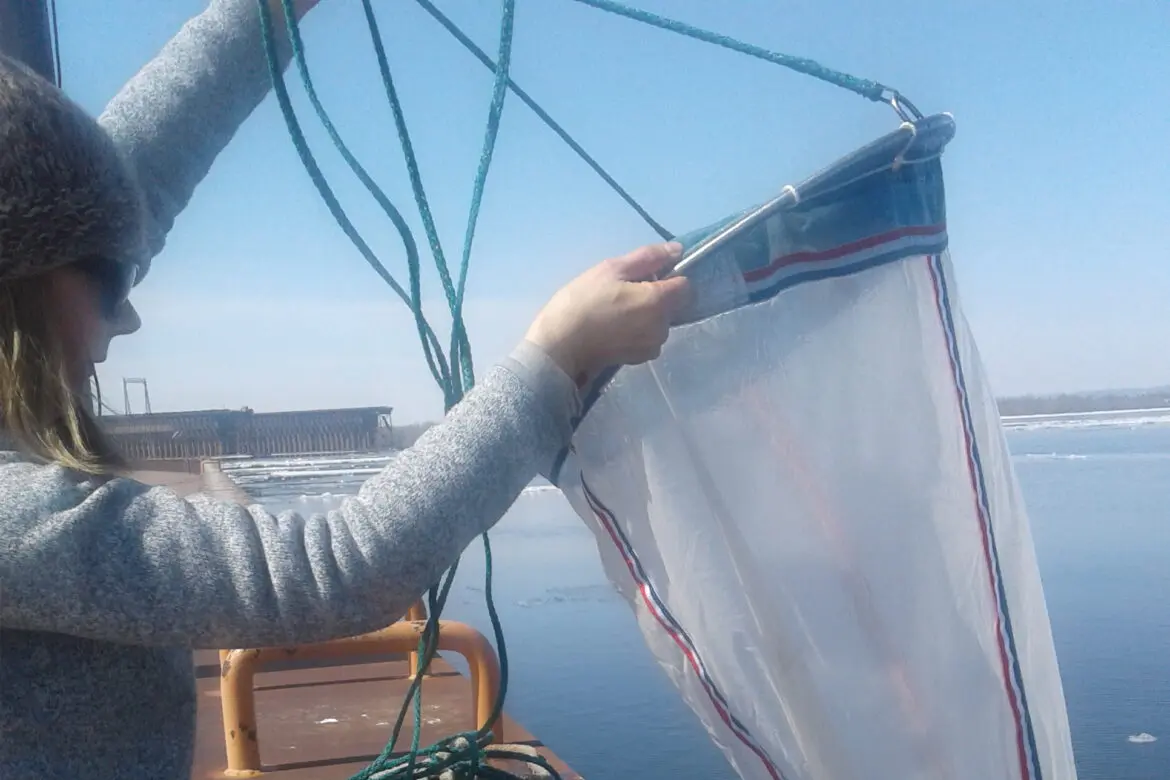
Using traps and nets, researchers last summer collected dozens of adult and juvenile specimens, including pregnant females, at Wisconsin Point and the Montreal Pier in Duluth-Superior Harbor, according to a new study.
In 2017, the U.S. Fish & Wildlife Service collected a single specimen from Duluth-Superior Harbor in Minnesota, the study said. By comparison, 2025, researchers collected 81 specimens of the tiny shrimp-like crustaceans at those two sites.
The bloody red shrimp was first detected in the Great Lakes from samples collected in Muskegon in waters connected to Lake Michigan, according to the Great Lakes Aquatic Nonindigenous Species Information System. That was in 2006.

“Lake Superior now becomes the fifth and final Great Lake in which it is considered established. The delayed establishment in Lake Superior is notable and may reflect barriers such as colder temperatures and geographic isolation,” the study said.
This summer, said lead author Donn Branstrator, a biology professor at the University of Minnesota Duluth, the team is collecting specimens biweekly at Montreal Pier and monitoring about a half dozen other locations in the harbor.
The bloody red shrimp is “broadly omnivorous and the invasion’s ecological consequences are uncertain, the study cautioned. Based on its history of invasion across Europe, significant ecological impacts are possible,” the study said.
Branstrator said it is “hard to predict with any detail. We don’t yet have firm evidence of adverse consequences in the Great Lakes, but it presents a potential new pathway for nutrients and contaminants to move among species in the nearshore food webs.”
Research in European reservoirs linked its presence to major reductions in the biomass and diversity of zooplankton — a form of microscopic animal life — the study said.
The invader is native to the Caspian Sea and Black Sea regions and probably arrived in North America in ballast water dumped by transoceanic cargo ships, the study said.
By 2008, it was established in lakes Huron, Erie, Ontario and Michigan, as well as in the St. Lawrence River and two upstate New York lakes.
The Michigan Department of Natural Resources has no evidence of it becoming established or even detected in inland lakes within the state, department communications specialist Joanne Foreman said.
Foreman said the DNR isn’t actively monitoring for bloody red shrimp, “given that the U.S. Fish & Wildlife Service has a Great Lakes Aquatic Invasive Species (AIS) Early Detection Monitoring program that surveys all five lakes for AIS fishes and invertebrates with traditional techniques and more novel techniques such eDNA.”
Branstrator said scientists are also watching for several other nonnative species that have invaded the other Great Lakes and could reach Lake Superior.
The study by researchers at the University of Minnesota Duluth, University of Wisconsin Superior and Hobart and William Smith College appeared in the Journal of Great Lakes Research.
This story was originally published by the Capital News Service.

