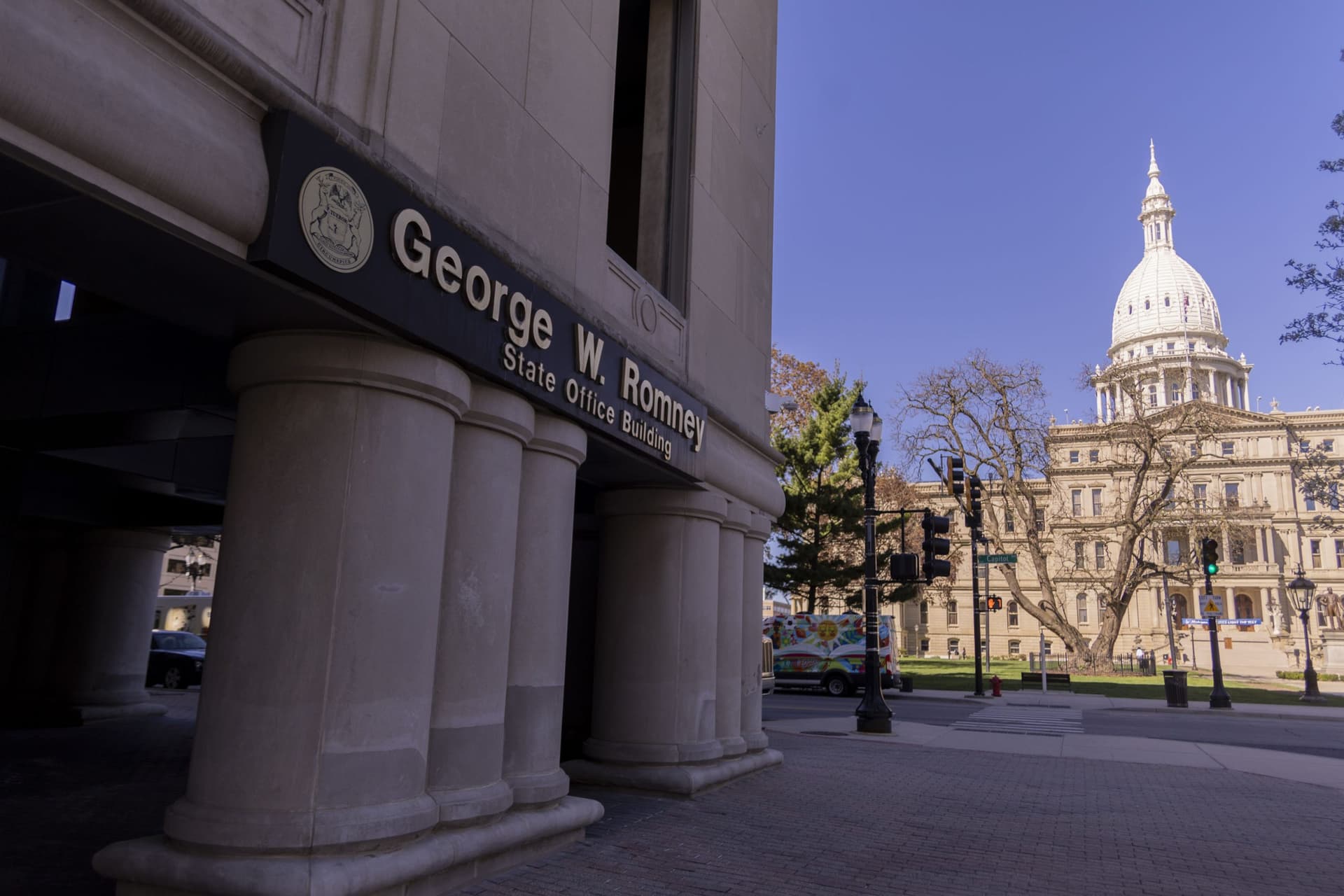


- Michigan lawmakers signed off on legislation to close the so-called revolving door between legislators and lobbying firms
- If Gov. Gretchen Whitmer signs the bills, Michigan would become the latest state to implement a ‘cooling off’ period for lawmakers
- Laws in other states have been challenged on First Amendment grounds, and critics say rules don’t go far enough
LANSING — Michigan is one of a handful of states that doesn’t ban lawmakers from becoming lobbyists immediately after leaving office — but that could soon change under legislation awaiting potential signature by Democratic Gov. Gretchen Whitmer.
Whitmer is currently reviewing the bills, which House Speaker Matt Hall has championed as a way to close the “revolving door” in Lansing. Hall, R-Richland Township, has said he expects the governor to sign the measures into law “very soon.”
Supporters say the long-discussed reform would help eliminate potential conflicts of interest for lawmakers who may be looking for their next job, thereby improving public trust in government.
“They run on a platform to help the people, they get elected … and then they become lobbyists when they leave office,” Hall said. “It’s a practice that’s going to end now.”
Similar laws in other states have prompted free speech complaints, however, and some contend the proposals may be more lip service than meaningful reform.
The rules allow lawmakers to say they’re “dealing with corruption,” said Corwin Smidt, an associate professor of political science at Michigan State University. “Whether it’s truly dealing with corruption, that seems much more questionable.”
At least 38 states already prohibit lawmakers from becoming lobbyists in some fashion, according to the National Conference of State Legislatures, a nonpartisan professional association for all state legislatures.
These bans range from as little as 6 months in Illinois and North Carolina, to up to 6 years after leaving office in Florida.
Michigan is included in that list, although current state law only applies to lawmakers who resign. In those cases, the former lawmakers cannot lobby in Michigan until their full term would have ended. Doing so carries a possible jail sentence, fine or both.
Under the new legislation, which would take effect in January, Michigan lawmakers would have to wait at least two years after leaving office to begin lobbying. The two-year ban would also apply to lieutenant governors, department directors and governors leaving their positions.
A third bill would bar state lawmakers from being paid to lobby government officials in other states.
The legislation has been a key priority of Hall’s and is part of a larger ethics and accountability package, including budget earmark reforms signed into law last year.
Past precedent
In recent years, several top Michigan lawmakers have registered as lobbyists after leaving office, including former Republican House Speaker Jason Wentworth, former GOP Senate Majority Leader Arlan Meekhof and former Democratic House floor leader Yusef Rabhi.
In at least one case, a lawmaker has lobbied out-of-state while in office.
In 2020, Ann Arbor Democrat Rebekah Warren told the Detroit News she had been hired to work with National Popular Vote.
Lawmakers “are supposed to be serving the public, but instead, they’re working on becoming lobbyists,” Hall said recently.
The bills passed earlier this month with broad and bipartisan support, but not all legislators were on board.
State Sen. Ed McBroom, R-Waucedah Township, argued the proposal amounted to “an egregious violation of each and every one of our First Amendment rights.”
“These bills are a terrible production, designed for nothing more than political gratuitous, self-aggrandizement of virtue,” McBroom said, later adding that lawmakers “gain a set of skills” while in office that better equip them for moving into lobbying on specific issues.
A farmer by trade, McBroom argued that the law would shut someone with a similar set of skills from lobbying for a group like the Michigan Farm Bureau, which he said amounted to “taking away our freedom of association.”
A point of concern
Those concerns may have merit, said Smidt, the MSU political science professor.
Closing the door on lawmakers becoming lobbyists restricts “people who have expertise in (an) area from actually helping new legislators learn more” about a specific subject, he said.
At least one similar law has been overturned on free speech grounds.
In 2024, a federal appeals court ruled that Missouri’s two-year cooling off period was unconstitutional because it violated lawmakers First Amendment rights and limited potential employment opportunities.
Should Whitmer sign off on the bill package, Smidt said Michigan could open itself up to a similar legal challenge.
The bills also do not address other forms of documented corruption in state government, Smidt noted.
He pointed to former Republican House Speaker Rick Johnson, who in 2023 was sentenced to 55 months in prison for accepting cash and other benefits as bribes in exchange for favorable treatment after he was appointed chair of a since disbanded medical marijuana licensing board.
The bills, in their current form, would not address such situations, Smidt argued, saying he felt the legislation “gets at the symptom” of public disapproval of lawmakers writ large, “but not the cause.”