

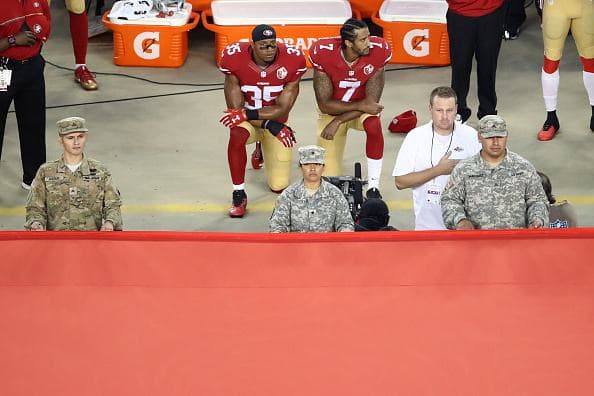
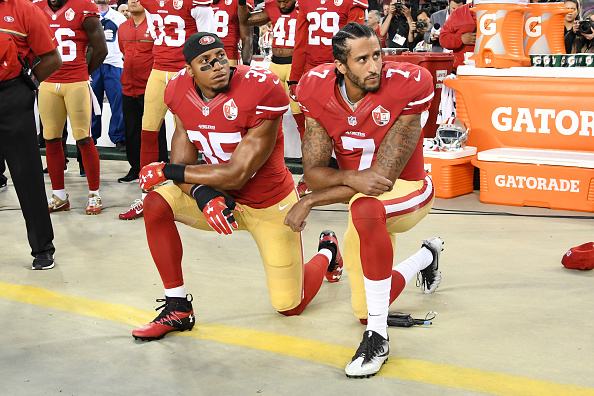
SANTA CLARA, CA - SEPTEMBER 12: Colin Kaepernick #7 and Eric Reid #35 of the San Francisco 49ers kneel in protest during the national anthem prior to playing the Los Angeles Rams in their NFL game at Levi's Stadium on September 12, 2016 in Santa Clara, California. (Photo by Ezra Shaw/Getty Images)
Reading Colin Kaepernick’s memoir as a biracial Black kid from Milwaukee

Sep 28, 2026, 6:06 PM ET
Share


Lots has been said about Colin Kaepernick and the NFL’s handling of his protest to the national anthem, but unfortunately narratives have long been shaped by those in power.
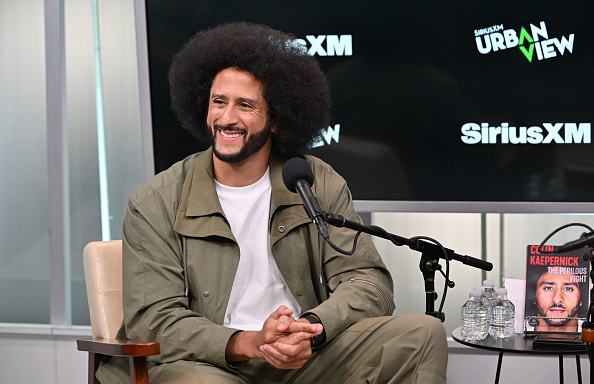
That’s why I was pleased to see that Kaepernick wrote a memoir, “The Perilous Fight,” which hit bookstores this month. The book is an all encompassing look at Kap’s life, which starts in Milwaukee, Wisconsin, my hometown.
I found so many parallels between Kaepernick's life and my own, from growing up biracial in white spaces, to finding rebellion within societal norms, and having a deep love for football.
Kap is, of course, a super athlete, while I’m, of course, a super watcher of athletes.
But as Kaepernick writes in the book, every Black man has their own awakening. Kaepernick’s came later in life once provided the opportunity to read about Black liberation and racial equality in the United States.
Here are some key moments from the book after reading:
Being a biracial kid can be a struggle
Kaepernick doesn’t remember much about Wisconsin. He was born in Milwaukee and his white biological mother, Heidi Russo, was nineteen at the time and gave Kaepernick up for adoption. He never knew his father, a Black man.
A white couple, Rick and Teresa Kaepernick, adopted Colin and brought him home to Fond du Lac. The Kaepernicks moved to Turlock, California, when Colin was preschool age.
Almost immediately, racial dynamics had an effect on a young Colin.
Not only was he the subject of a racist attack by a few white kids who tied a rope around him and yelled “nigger!” at him, but the future civil rights activist faced racism in his own home, which is something he is very open about in his memoir.
Kaepernick lived in a majority-white environment for essentially most of his life until being drafted by the San Francisco 49ers in 2011. His parents were adamant that Kaepernick could only wear his hair a certain way so as to not look like a “thug” and they blamed him for times he had run-ins with law enforcement.
Kaepernick discusses race throughout the book, reliving traumatic events and sharing how it is moving through the world as biracial. Like Kaepernick, my father is Black and my mother is white.
I can understand him as he discusses how biracial people who grow up in white spaces tend to assimilate to white American culture easier and therefore have a leg up, while at the same time, biracial folks also receive criticism from Black folks for their upbringing. Biracial kids can tend to be drawn to their Blackness because that’s how they are perceived by the world, especially if we grow up in white culture we feel different then everyone else and I know in my case, I wanted to know why. It’s a dynamic that will likely never end and still bubbles up even to this day.
But a story that sounds too familiar, Kaepernick discovered “The Autobiography of Malcolm X” late in life and it forever changed his outlook. His now-wife, Nessa, introduced him to the book and Kaepernick went on to dive into more writings by Frantz Fanon, Huey P. Newton and James Baldwin.
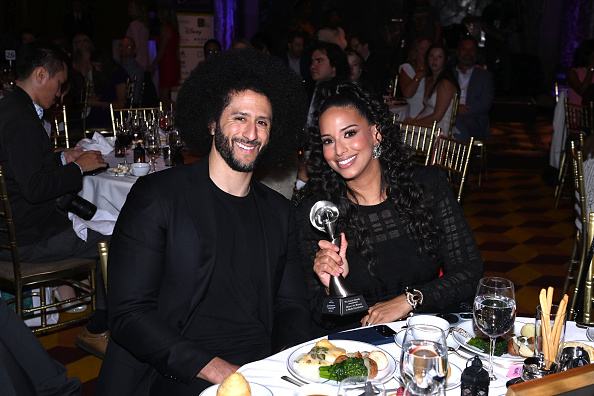
I related to this as a biracial kid growing up on Milwaukee’s north side. My neighborhood was majority Black but had some older white folks that had paid off their homes. I’d often get ridiculed for having a white mother by other Black kids in the neighborhood. At the same time, I attended school in neighboring Wauwatosa, which is overwhelmingly white, and was often met with tension due to my skin color without even really realizing it until I got older.
Similar to when Kaepernick was attacked in his youth, I was part of an incident in my youth that stuck with me.
My older brother, Dominique, was the athlete of the family and wherever his teams traveled, I would tag along to watch. I’ve always loved sports from a young age, but never was a good enough athlete.
We were in Jefferson County, a rural place about an hour west of Milwaukee, for a little league game. I was maybe eight or nine years old. I decided to take a break from watching baseball to sit under the tree and get some shade when a group of young white kids approached the area and began huddling around.
I got comfortable and began dozing off after stuffing my face at the concession stand, when suddenly there was a huge blow to my head. I looked up in pain and noticed a white kid holding a metal baseball bat and another kid holding a glove about 10 yards away.
It was at this moment I realized the kids were doing some batting practice right where I was sitting and struck me in the head during his swing follow through.
I don’t know if it was intentional, but I remember them staring at me waiting for a response. No apology. No nothing. I felt embarrassed as if I did something wrong. I went running for my mom with tears running down my face.
I don’t remember if I was ever straight forward with my mom about what happened. I just remember her consoling me in the loving way she’s always done.
When I got older and thought back about it, I couldn't help but question whether my mom could have even done anything about it given the dynamics. I was likely one of, if not the only, Black kid at the park. Wisconsin, particularly the southeastern portion of the state, is filled with racist white people.
My parents did an excellent job of hiding me from reality and it wasn’t until college, because I didn’t learn too much about Black history in Wauwatosa schools, that I discovered Malcolm X and all the Black intellectuals that fought for liberation in the United States.
Sometimes it takes awhile, but most Black men get there.
Kaepernick idolized Iverson, Moss and Vick
Kaepernick is 38, I’m 34. It makes sense that we have some of the same athletic heroes.
He was drawn to the major personalities that were undeniably talented, the best while dealing with adversity — Allen Iverson, Randy Moss and Michael Vick.
Kaepernick writes in the book how he wanted to be just like them. He got braids because of them. He wore certain clothing because of them.
“Iverson was brash; he was bold; he was unapologetic in his Blackness and his unwillingness to go along with the status quo,” Kaepernick wrote. “He didn’t care what you thought about him. And I absolutely worshipped him.”
Kaepernick got to play with another childhood hero in Moss, who played for the Niners in his final year. Kaepernick and Moss helped lead the team to a Super Bowl appearance against the Baltimore Ravens, who won. That Super Bowl is memorable to most people because it was the one where Beyonce performed at halftime and in the second half the power went out.
Kaepernick discusses how Moss immediately brought him under his wing in San Francisco. And there was one moment that was a bit hilarious and undeniably Moss.
The starting quarterback for the Niners was Alex Smith, a former No. 1 overall pick, and Kaepernick had to wait awhile, but Moss was ready for him to play.
“I was chatting with Randy after a drill,” Kaepernick wrote. “I had been pressing too much, forcing throws because I was so eager to make something happen.
“‘Hey,’ he said to me, calm and cool in that inimitable Randy Moss way I’d practically studied growing up. ‘Just take a deep breath and do what you do.’ My eyes widened. Randy Moss is giving me tips on my game? Let me chill out and take a breath.”
“Once practice was over, I walked off the field with Randy. ‘Hey, look here, my nigga,’ he said, sounding every bit the country boy from West Virginia. ‘This white boy ain’t gonna take us to the Super Bowl. So, if we gonna go to the Super Bowl, you got to take us there.”
Kaepernick gave Moss his wish, despite falling short of the title. Moss famously lost two Super Bowls, once while on the undefeated New England Patriots. He’s still highly regarded as the greatest receiver to ever play the game not named Jerry Rice.
Moss really is the reason I fell in love with football. Despite growing up in Wisconsin, my dad hates the Green Bay Packers and so it almost felt sinful to root for them most of my life. My mom is a lifelong Packers fan, but when it comes to sports, everyone wants to connect with their father, right?
My dad is a Dallas Cowboys fan, but something always felt off about them to me. When I was a young kid, we had the NFL Sunday Ticket package and I was able to watch unlimited football and found myself diverting from the Cowboys game to others. On top of that, hourless watching of ESPN was the norm.
I was drawn to this outspoken, skinny, country dude with a fro — Moss. Years later, Kaepernick now rocks a fro, too. I would walk around yelling “straight cash homie!” after Moss yelled it at a reporter asking how he’d pay for a fine. As a result, I religiously watched the Minnesota Vikings — my adopted childhood team. I later sided with my mother and began rooting for the Packers when the starting quarterback became Jordan Love, a biracial man I can relate to.
Kaepernick said he grew up in a Wisconsin sports home — Packers, Bucks, Brewers and Badgers. He said it felt extra special to travel to Lambeau Field and defeat Aaron Rodgers and the Packers multiple times in the playoffs, which he did masterfully.
Nate Boyer is not who you think he is
One of the more fascinating aspects of the memoir is of course what people have been waiting on — the juicy details about what the NFL did and didn’t do in wake of a racial reckoning and Kaepernick taking a knee.
Kaepernick takes his shots in this portion. Most notably, how wrong the media covered Nate Boyer, the white former Green Beret and football player that famously stood next to Kaepernick and teammate Eric Reid as they kneeled.
If you Google Boyer a whole bunch of articles from outlets considered very esteemed report that Boyer was the brainchild behind Kaepernick’s decision to kneel. It couldn’t be further from the truth.
“They all just accepted what he said as fact,” Kaepernick wrote. “It was a clear illustration of white supremacy at work—a white savior military veteran who used to play football telling us what to do. A convenient narrative that made our protests more palatable. No longer was I a freethinking Black man who could come to a conclusion and make a decision by himself.”
Kaepernick said Boyer committed to kneeling in wake of racial injustice and police shooting in the U.S., but then right before the anthem started playing he told Kaepernick he’s backing out and instead stood there for the photo op. He later texted Kaepernick asking if he could use his likeness in T-shirts. Kaepernick said no.
Jay-Z was brought in to save the NFL
Others are also not portrayed glowingly in the book, although Jim and John Harbaugh are. Kaepernick said they always had his back. There’s also a nice note on acting legend Jim Carrey, who wore Nikes while Kaepernick was promoting a new campaign post-kneel.
But others, like legendary linebacker Ray Lewis, as well as rap icon Jay-Z and his company Roc Nation are not viewed favorably.
The NFL brought in Jay-Z in 2019 after experiencing direct economic impact from protests and the attention around Kaepernick.
“It was an obvious PR effort to improve the league’s image in Black communities that were protesting and boycotting the NFL because they were upset with how the league had treated me,” Kaepernick wrote. “By latching onto Jay-Z, one of the most influential Black artists in the world, the league was chasing his clout and hoping some of it would rub off on them.”
In 2017, Roc Nation attempted to bring Kaepernick into their sports division, but the initial meeting went haywire. Kaepernick said the company’s Latino president, Juan Perez, encouraged Kaepernick to not wear a shirt with the Black Panthers on it because the Panthers are a “hate group.”
Also, Jay-Z wore Kaepernick’s jersey on stage during a performance “Saturday Night Live,” but then ghosted Kaepernick when he would reach out. Months of reneging on opportunities continued. Jay-Z wanted Kaepernick to even kneel on stage as he performed his song about O.J. Simpson, which Kaepernick declined.
Of course, the NFL would eventually whitewash the whole period, instead painting phrases on the field and letting players wear inspirational messages on their helmets, while symbolically investing millions into fighting systemic racism. Jay-Z still serves in the role, which includes picking a Super Bowl halftime performer.
Kaepernick discusses so much more in “The Perilous Fight,” particularly on how he struggles to come to terms with wanting to be an NFL player and show off his God given talents, while also criticizing the institution.
It’s unfortunate that in the world, even sports aren’t exempt from corruption. At its heart, it’s just a game, but we know it’s so much more — a business where white billionaires are the beneficiaries.
But Kaepernick has done a lot of good, with his advocacy off the field, plus I’m not sure that defensive guru Brian Flores would be able to mount a legal challenge against the NFL for racial discrimination like he has done.
“Being Black in America is a perilous fight,” Kaepernick wrote. “I can’t afford to back down. None of us can. Not if we’re going to turn this thing around. The world needs each of us to be willing to stand up, or sit down, or kneel, to bring about the change we long for.
“We must never forget: Our children are watching.”

Drake Bentley is the general assignment reporter for the Milwaukee Courier, covering politics, sports and the community. He is an award-winning investigative journalist who has worked for the Milwaukee Journal Sentinel, Wisconsin State Journal, Newsweek, Heavy and The Sporting News. He is a northside Milwaukee native, former political staffer and graduate of the University of Wisconsin-Whitewater and the University of Nebraska.
