

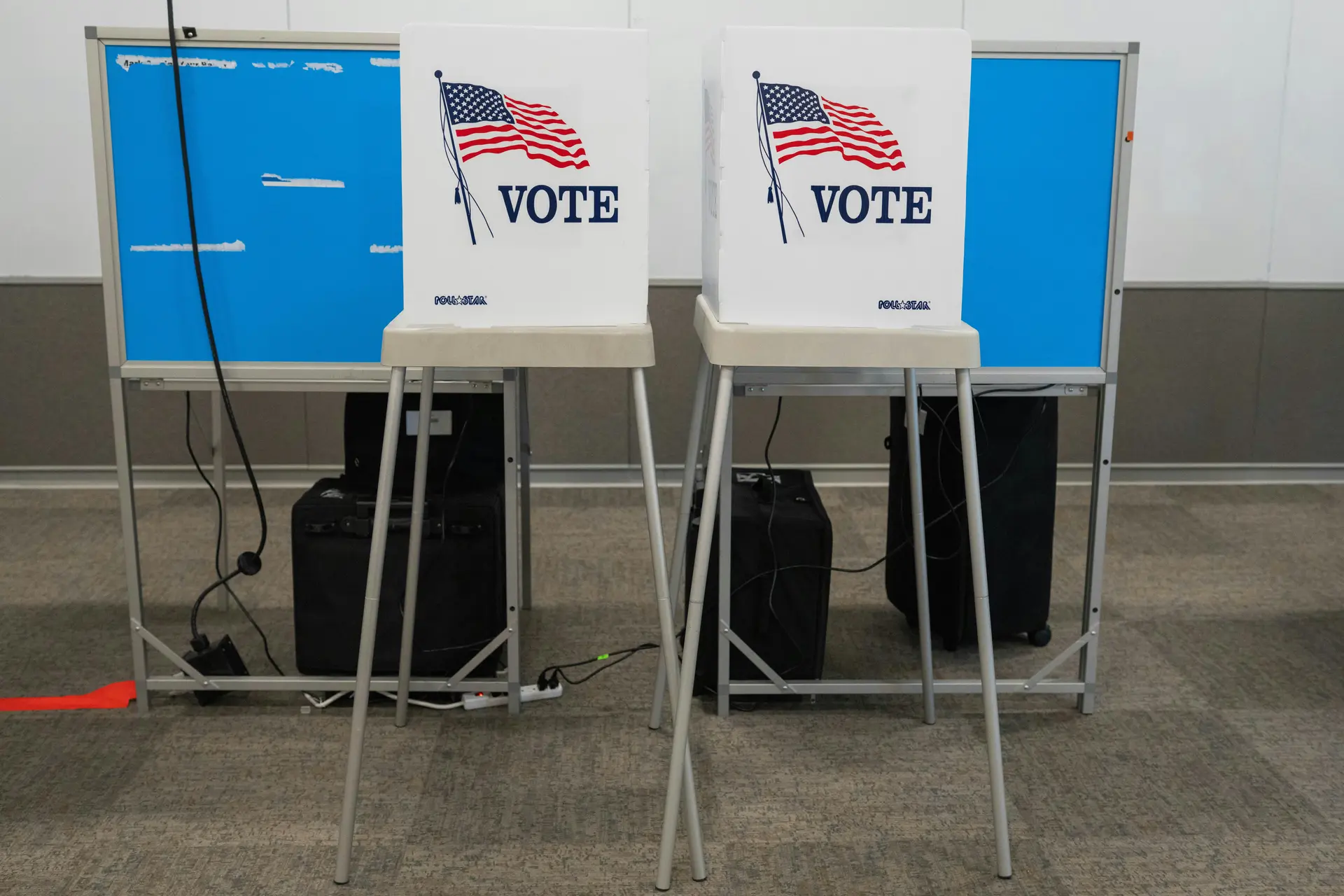
Despite federal election debates, Wisconsin officials say November voting rules remain unchanged
STEVENS POINT, Wis. — Despite national debates over voting requirements, election security and federal involvement, Wisconsin election officials say voting procedures will remain unchanged in November.
"Everything is still the same. You're going to vote in the same way in November that you did in other elections," Wisconsin Elections Commission Administrator Meagan Wolfe said.
Wolfe said the state is preparing for more than 2.6 million voters, with approximately 3,600 polling places and more than 30,000 poll workers expected to help administer the election.
She joined former U.S. Attorney John Vaudreuil, Portage County Clerk Maria Davis and Stevens Point City Clerk Susan Pagel Wednesday evening at UW–Stevens Point for Trust in Our Elections: A Community Conversation.
The event was hosted by Keep Our Republic, a nonprofit organization that works on election issues in several states, including Wisconsin, and the university's Office of the Chancellor. The forum was part of Keep Our Republic's ongoing community discussions about elections, with panelists answering anonymous questions submitted by audience members.
Wolfe said election officials have spent the past two years preparing for November. Over the past year, municipal clerks have updated or inactivated more than 500,000 voter registration records as part of routine voter list maintenance. The process helps keep voter rolls accurate by updating registration information and identifying records that may no longer be active, for example, when voters move or die.
Vaudreuil, who served as U.S. attorney for the Western District of Wisconsin from 2010 to 2017, addressed questions about federal involvement in elections, including the Safeguard American Voter Eligibility (SAVE) Act.
The proposed legislation would require documentary proof of U.S. citizenship, such as a passport or birth certificate, when registering to vote in federal elections. Vaudreuil emphasized that the legislation, which passed the House but stalled in the Senate, has not become law.
"It's not the law. We can't worry about things that don't get passed. We have enough problems with the things that do," Vaudreuil said.
He also discussed an executive order challenged in court and the federal government's efforts to use citizenship databases to verify voter eligibility.
On September 25, the U.S. Supreme Court temporarily allowed the Trump administration to use an expanded federal citizenship-verification database while the legal challenge continues. The court noted that federal law restricts systematic voter-roll removals within 90 days of an election but permits individualized citizenship checks.
In a separate case on October 9, a federal judge struck down the Justice Department's policy of obtaining state voter registration lists for comparison with federal citizenship records, finding that the department had exceeded its authority.
Vaudreuil told the audience that these developments should not change how Wisconsin voters cast their ballots in November.
He also addressed concerns about military personnel at polling places, explaining that existing federal laws restrict their involvement in elections. He distinguished military involvement from federal election monitors, who have a legally authorized role in overseeing compliance with voting rights laws and must follow Wisconsin's rules at polling locations.
Vaudreuil disputed claims of widespread voting by noncitizens, saying his experience as a federal prosecutor and his review of available evidence did not support allegations of large-scale fraud.
While Vaudreuil focused on federal election issues, Wolfe explained how Wisconsin verifies votes and election results.
Wisconsin uses paper ballots, providing a physical record that can be checked against electronically tabulated results. Voting equipment is publicly tested before elections, and results undergo additional review before they become official.
Those safeguards continue after Election Day. For November, the Wisconsin Elections Commission plans to audit 10% of reporting units across the state, including at least one in each of Wisconsin's 72 counties. Election workers will hand-count ballots in selected contests and compare the totals with voting equipment results. The audits are open to the public.
Wolfe also addressed why election results can take time to report, particularly in communities with large numbers of absentee ballots. Wisconsin law prohibits election workers from processing absentee ballots before Election Day, leaving that work to be completed once polls open. Absentee ballots must also be received by 8 p.m. on Election Day to be counted.
Voters can check their registration, find their polling location and track absentee ballots through the Wisconsin Elections Commission's MyVote website at myvote.wi.gov.
Behind those election procedures are Wisconsin's local clerks, many of whom balance election responsibilities with other jobs.
Wisconsin has 1,851 municipal clerks, and Wolfe said roughly one-third turn over each year. That means approximately 11 new clerks each week who need training and support.
Portage County Clerk Maria Davis said many municipal clerks work other jobs during the day and handle election responsibilities in the evenings. Her office regularly fields questions from clerks outside normal business hours.
"There are times when I get home and I'm with my kids, and a clerk will call and be like, 'I just got into the office because I got done with my day job, and I don't understand this,' and we're taking calls all night long, trying to help them," Davis said.
Davis said two of Portage County's 27 municipal clerks recently left their positions. One resigned after receiving serious threats that Davis said were unrelated to elections, while the other retired. Experienced former clerks have stepped in to help fill the vacancies.
In Stevens Point, City Clerk Susan Pagel described the demands of preparing for November's election. Pagel was elected in April 2025 after spending 27 years in the city's treasurer's office.
Since September, she's been coordinating schedules for approximately 200 poll workers across the city's six polling locations, a task she said she only recently completed.
"I wasn't expecting a 24/7 position," Pagel said.

