

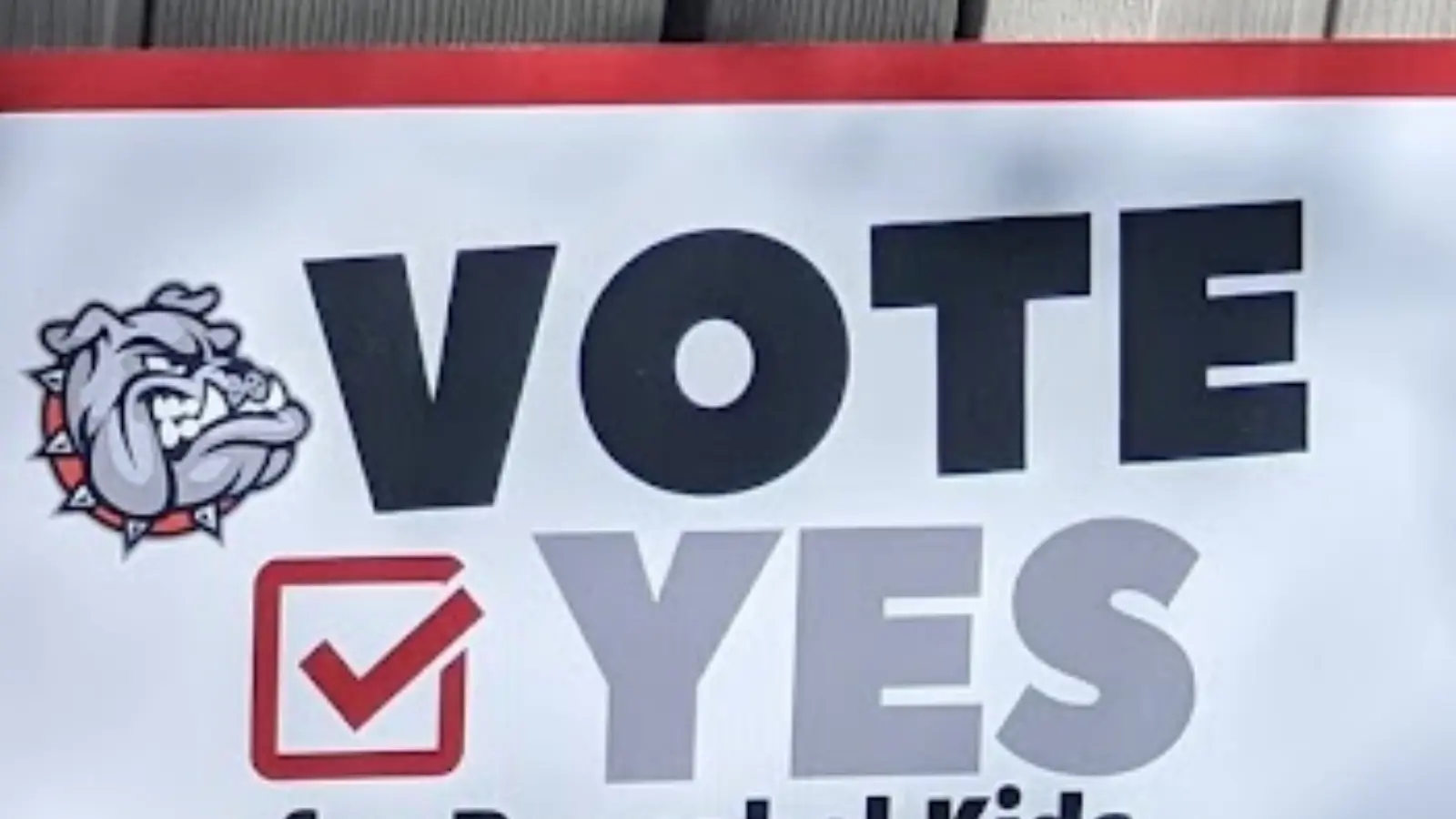
Wisconsin voters were mixed on levy increases, but in many areas, ballot measures to add funding for public schools passed on Tuesday.
Source: Jimmie Kaska | Civic Media
Majority of school referendums pass in 2026 General Election
45 of 79 school district ballot measures succeeded in Wisconsin this fall

MADISON, Wis. (Civic Media) - Wisconsin voters approved 45 of 79 ballot measures for school district levy increases or bonding in the 2026 General Election.
All told, voters approved just over $1.3 billion in referendum funding for public schools around the state.
Unlike previous election cycles, most of the ballot measures were decided by significant margins, with only a handful of them decided by fewer than 100 votes.
Among passing referendums, the closest was the Washburn School District in Bayfield County with an 8-vote margin. Lake Mills, with over 5,000 votes in the race, was decided by just 32 votes (50.3% yes). Similarly, Marinette's referendum was decided by just 40 votes (50.4% yes) in over 5,500 ballots cast. Other small margins include Lodi's second referendum question (61 votes), Swallow School District (66), Wonewoc-Union Center (69), and Evansville (90).
In the realm of "close, but passing," districts with a margin of less than 5% more yes than no votes (52.5% or lower) include Brown Deer (both questions), Viroqua, Dodgeville, Pulaski, Ripon, Waunakee (both questions, although the second one was 52.6%), and Iola-Scandinavia.
16 of 45 passing referendums, or about a third, were decided by less than a 5% margin. On the flip side, 22 of the passing referendums, or roughly half, were decided by a 10% or greater margin, the largest being Winter's operational referendum to avoid dissolution and Little Chute's bond issue for technology, each with more than two-thirds of voters selecting "yes" on their ballots.
On the flip side, there were 34 referendums that failed, with a few of them very close. The narrowest margin for any referendum in the state belongs to the Geneva J4 School District in southern Wisconsin, which saw its operating referendum fail by a single vote, 298 to 297. Five other districts saw their referendums fail by under 100 votes: Montello (39), Whitehall (41), Twin Lakes #4 (45), Cashton (73), and Oconto (85).
11 of the 34 ballot measures failed by less than 5% of the total vote, receiving 47.5% to 49.9% of the vote, accounting for about a third of the failed referendums. Many of the failed referendums were by wide margins, with 19 of 34 of the questions failing by a 10% or greater margin (55% plus "no" votes). Granton and Bloomer, which saw their referendums fail by a roughly two-thirds vote.
One of the more interesting trends in the fall cycle was that the vast majority of capital referendums - called "issue debt" in DPI reporting - managed to pass. 14 of the 17 capital projects received voter approval, including 9 of the 10 biggest asks on the ballot. The lone measure to fail was in Bloomer, where voters overwhelmingly rejected a $77 million ask for a new high school and other capital projects.
A total of eight ballot measures asked for recurring operating referendums, which are permanent levy increases. Waunakee, a suburb in Dane County, Fox Point J2, a suburb in Milwaukee and Ozaukee counties, and Seneca, a rural district in southwestern Wisconsin's Crawford County, were the only 3 to approve such a measure. 5 other referendums of this type were knocked down by voters by mostly wide margins.
The remaining referendums were limited-term operational referendums. Larger cities and suburbs saw more success with these questions, with Green Bay's $158 million question lasting through the 2030-31 school year passing with 54% "yes" votes. Middleton-Cross Plains, Janesville, Lodi, West De Pere, Evansville, and Greenfield all saw their operational referendums pass among measures seeking over $20 million. Only two such measures, in Whitewater and Delavan-Darien in southeastern Wisconsin, failed.
Four districts sought to avoid dissolution in the fall election. Siren, in rural northwestern Wisconsin, sought $3 million in an operational referendum. Voters there overwhelmingly rejected the measure, with 61.1% of voters casting a "no" vote. In the spring, a ballot measure failed by just 88 votes. Another rural northern Wisconsin district, Gillett, similarly saw a 3-year operational referendum for $5.7 million fail by a wide margin, with 57.6% of voters going against the question. In the spring, Gillett's referendum question failed with over 66% voting no.
A third rural northern Wisconsin district rallied with a huge vote in favor of keeping the district going. Winter's $6 million non-recurring referendum was approved by over 68% of voters. In the spring election, voters rejected a referendum question by a 20% margin, 60% no to 40% yes.
A fourth district, larger than the other three, managed to narrowly pass an operating referendum after multiple previous failed ballot measures. Dodgeville, which is in Iowa County, just west of Madison and Dane County, was able to stave off talks of dissolution for a little while longer, as a 125-vote margin will deliver $1.9 million a year over 3 years for $5.7 million total to help balance the operating budget.
Two districts seeking opinions on consolidation placed five advisory (non-binding) options on ballots in Clark County. Loyal and Greenwood provided four options for consolidation and one option to reject consolidation. By a large margin, voters picked one of four consolidation options - 1,486 to 992. While the option to reject consolidation had the most votes of the five options, two of the other options received significant support as well. The third option, to consolidate with Greenwood hosting the high school and Loyal hosting the elementary and middle schools, was the second-most popular pick at 645. The third-most picked option was the first one, which was a consolidation of the districts by any means, at 520 votes. Two other options - one to keep all buildings open in a consolidation, and the other to place the high school in Loyal and middle school in Greenwood, each received significantly less support with just 321 votes combined for the second and fourth options.
Most school districts seeking a referendum this year cited how voters view school spending, rising property taxes, and political stances on public versus private school education are pushing down success rates of referendums in general and making the success or failure of each ballot measure subject to a handful of votes. Most districts also cited a lack of state funding for education, with the current formulas tied to enrollment, which is declining for the vast majority of districts.
Declining aid and rising costs in services and operations have left most districts - nearly two-thirds of the 421 districts in Wisconsin since 2023 - using referendums to help pay for staff, facilities, and other essential or legally-mandated services. Over 90% of districts in Wisconsin have had at least one referendum since the revenue limit system was put in place three decades ago.
Nearly every district included notes on advocating for change to the current school aid formula on their referendum websites or in social media posts. The current formula, which was de-coupled from inflation 15 years ago, has left public schools pacing well behind inflation for funding, prompting referendums at nearly every district in Wisconsin.
Voters in the Spring Election this year approved 46 of 75 school district referendums, meaning that the 2026 total is 91 passed referendums versus 63 failed referendums. In 2025, which did not have a fall election, 51 of 89 school referendum questions passed, while 38 failed.
You can see election results from the 2026 General Election county-by-county on the Wisconsin Elections Commission website.
You can see a list of school referendums – and officially-reported totals – on the Wisconsin DPI website.
Finally, Civic Media has added up all the numbers from call sheets and summaries from election night returns from all 72 county clerk offices in Wisconsin on election night.
All results of school referendums will be canvassed by districts this month before they are considered official. Election night returns are unofficial.
Jimmie is Civic Media's Sports Director who also works in digital content, sports, news, and talk programming. Email him at jimmie.kaska@civicmedia.us.