Manufactured consent: Paid social media posters are being recruited to promote Wisconsin data center
A Wisconsin political operative approached at least one writer about posting social media comments favorable to the OpenAI/Oracle/Vantage data center in Port Washington.
As tech companies spend billions to build hyperscale data centers and millions to promote them, an effort is underway to recruit people to write paid social media posts to boost at least one of the controversial projects in Wisconsin.
Those interested must sign a nondisclosure agreement even before applying.
To get the “creators and AI” work, individuals must agree “to keep this document, survey and all emails about this project confidential,” according to a document viewed by Wisconsin Watch.
That approach appears to conflict with data center operators’ recent pivot away from using nondisclosure agreements.
Those NDAs, disclosed by Wisconsin Watch earlier this year, were made between data center developers and local and state government officials.
Former Republican legislative aide makes positive posts
One person soliciting the social media boosters is Scott A. Becher, a former Republican legislative aide and public relations consultant who ran unsuccessfully for mayor of Neenah in April.
Becher previously worked as chief of staff for state Rep. Steve Wieckert, R-Appleton, who served in the state Assembly from 1997 to 2009. His most recent state-level political work, on two state legislative campaigns, paid him $6,000 in 2020 and 2023, according to state campaign finance records.
In early 2025, Becher made two positive posts about data centers on Facebook.
Responding to a post about Microsoft pursuing a data center in Kenosha, he wrote: “High tech investment happening all across the state, why isnʼt Neenah tapping into its high tech infrastructure to secure more high tech jobs and high tech companies investing on our community.”
A week later, he wrote: “Why can’t Neenah get a multi-million dollar data center like Port Washington, Pleasant Prairie and now Beaver Dam and possibly even nearby the Village of Harrison are getting to increase their tax bases?”
Becher didn’t return messages requesting comment.
Wisconsin Watch reported on what seems to be a growing trend of paying influencers to post on political topics, often without disclosures. Many videos about how expensive it is to live in Green Bay were pure fiction.
The recruiting
Charles Rathmann, a software analyst in the Driftless Area of southwest Wisconsin, told Wisconsin Watch he has known Becher since they met as students at the University of Wisconsin-Oshkosh decades ago. He praised Becher’s work in public policy communications.
Rathmann said Becher contacted him in September and they spoke several times by phone and text messages.
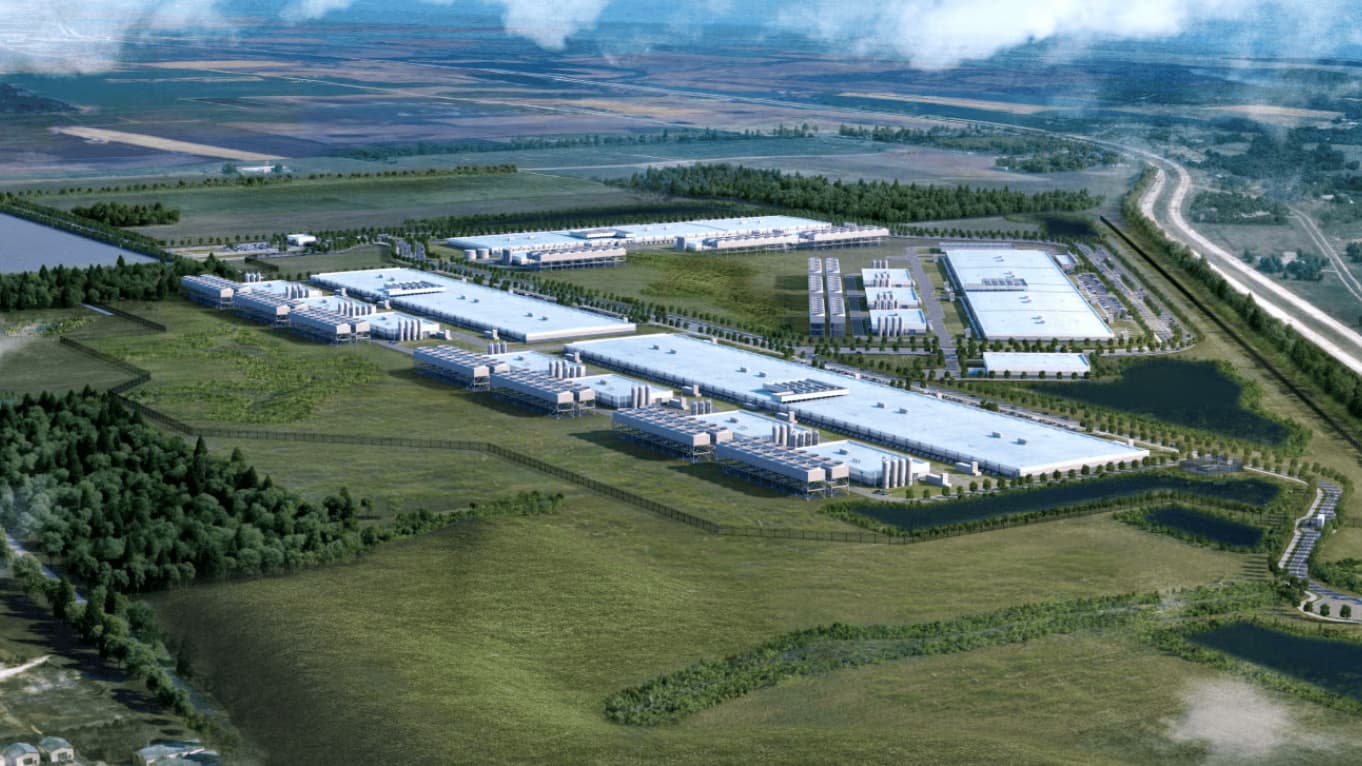
Rathmann said Becher asked him if he would be interested in being paid to do social media posts promoting the $15 billion OpenAI/Oracle/Vantage data center now under construction in Port Washington, north of Milwaukee.
Rathmann said Becher told him he would have to sign a nondisclosure agreement in order to be hired. He said he told Becher he would not be interested, partly because the posts would not be labeled as paid content.
Becher told Rathmann he would be paid $100 to attend a meeting if his initial application was accepted. But Becher wouldn’t answer Rathmann’s questions about how much posting would be expected or how much that work paid.
Rathmann said the effort reminded him of what media critics such as Walter Lippmann, Noam Chomsky and Ed Herman have called “the manufacture of consent.”
“What this group is looking for is not an objective analyst, but likely consumer-level social media users looking to make a few bucks,” Rathmann told Wisconsin Watch. “That is not for me. … When industrial concerns rely on sock puppets, we cannot trust discourse the way we normally can when competing interests are speaking in their own name.”
Through a Wisconsin spokesperson, Vantage declined Wisconsin Watch’s request for an interview on the use of paid posters.
The Denver-based company instead alluded in a statement to an advertising campaign on television, radio, online and social media it launched in September for the Port Washington data center, known as Project Lighthouse. “Any partnerships are disclosed in accordance with applicable advertising guidelines and creators maintain editorial control over their content,” the statement said.
It’s unclear whether paid posters are being used to promote the other two hyperscale data centers under construction in Wisconsin, Microsoft’s $20 billion complex in Mount Pleasant, south of Milwaukee, and Meta’s $1 billion facility in Beaver Dam.
A Microsoft spokesperson said “we don’t have anything to share on this topic at this time.” A Meta spokesperson said “no such efforts are in place.”
State legislation was introduced in February to prohibit NDAs between data center developers and local governments, but did not become law. The author, Rep. Clint Moses, R-Menomonie, said he would reintroduce his bill after the new legislative session begins in January. He said he would expand it to include the Wisconsin Economic Development Corp. in response to a Wisconsin Watch report that the agency has signed at least five NDAs with data center developers.
Similar efforts to promote data centers
Recent news reports revealed similar paid-post efforts to promote artificial intelligence data centers around the country:
- Wyoming-based Xomad, which touts its work with “trusted local influencers,” offered to pay creators to promote Project Jupiter, an OpenAI and Oracle-backed data center in New Mexico, Source New Mexico reported.
- A group called North Carolina Connects ran ads on TV, radio and social media promoting data centers without disclosing that it was backed by the Data Center Coalition trade group, Inside Climate News reported.
Helen Santoro, Michael Nolan, Seraphina Feron and Anna Massoglia from MuckRock’s Sunlight Research Desk provided research for this story.
Disclosure: The OpenAI Foundation recently awarded a grant to Wisconsin Watch but has no control over its editorial decisions. We will update our funding page to reflect the grant. A list of donors and funders through 2025, as well as our donation acceptance policies, can be found here.

Originally published by Wisconsin Watch.