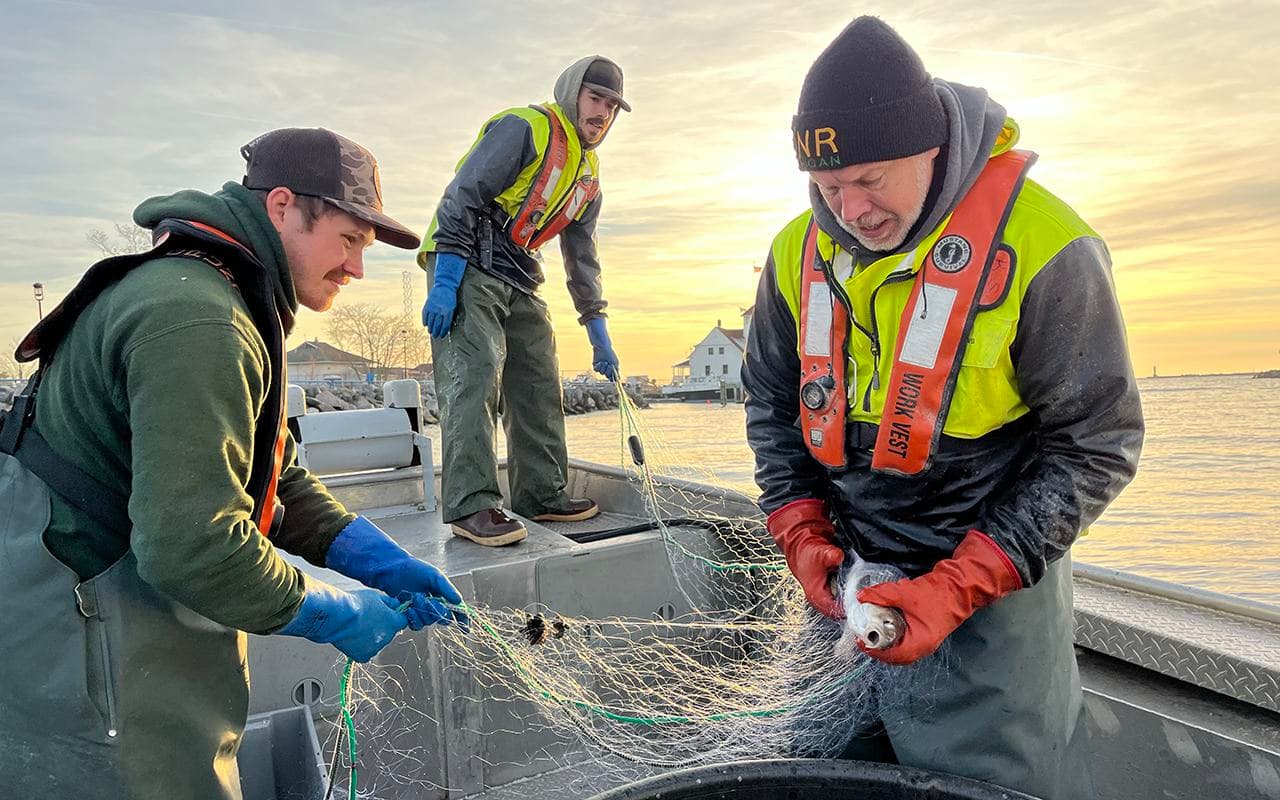
From left, Kollin Kemerling, Drew Niemiec and Kris Snyder work to untangle netted whitefish in the Muskegon Channel on Wednesday, Nov. 18. The trio work for the Michigan Department of Natural Resources, which is teaming up with tribes and the federal government on a whitefish rescue mission
Source: Kelly House/Bridge Michigan
Inside Michigan whitefish rescue: late nights, high hopes and extracted sperm
State scientists are mounting a last-ditch effort to prevent the iconic fish from extinction in Lake Michigan. The genetic rescue hopes to preserve future generations. It begins with a shock during spawning season.

This story was originally published by Bridge Michigan (bridgemi.com), a nonprofit and nonpartisan news organization. To get regular coverage from Bridge Michigan, sign up for a free Bridge Michigan newsletter here.
- With Lake Michigan whitefish on the brink of collapse, state scientists executed a last-ditch rescue mission
- Working from a pier in Muskegon, they netted wild whitefish in hopes of raising their fertilized eggs in captivity for the foreseeable future
- Invasive mussels have the fish struggling for survival in the lower Great Lakes
MUSKEGON — Anticipation is high for Michigan’s moonshot effort to save whitefish from the lower Great Lakes before they’re gone for good.
But plans are coming together so hastily, Matt Hughes needed to call a supplier for a rush order on special chemicals so the fish that fed generations can survive in his hatchery.
“I need you to overnight this to me,” the Michigan Department of Natural Resources hatchery biologist told his supplier Wednesday morning.
Hours later, Hughes sped to a pier in Muskegon to collect eggs that would be housed in the Wolf Lake Fish Hatchery that very same night.
Such is life lately for tribal, state and federal officials mounting a frantic effort to preserve Lake Michigan’s struggling whitefish stocks by raising their offspring in captivity
With little time to spare, they’ve spent recent weeks scouting for available hatchery space, retrofitting equipment, securing funding and readying boats and supplies.
It’s hectic, sure, but also “awesome,” Hughes told Bridge Michigan.
“I’ve never gotten to raise whitefish. So it’s a new challenge, for a good cause that I’m excited about.”
The hope is that captive-raised fish could eventually repopulate the lakes once humans find a way to quell the quagga mussels that now blanket the bottom of every Great Lake except Superior. The mussels hog the lakes’ nutrients, plunging commercial harvests of whitefish from 6.9 million pounds in 2009 to less than 2 million today.
With baby whitefish dying of starvation soon after hatching, scientists believe most of the whitefish left in the lower lakes will soon die of old age.
Efforts to intervene were limited until this summer, when following extensive reporting by Bridge Michigan, state lawmakers allocated $350,000 and the Great Lakes Fishery Trust chipped in nearly $900,000 more.
That triggered a race to prepare for a “genetic rescue” mission during the November spawning season. In addition to the state DNR work in Muskegon, officials with the Little Traverse Bay Bands Of Odawa Indians will rescue fish from northern Lake Michigan.
Bridge Michigan observed the operation on an unseasonably warm November night.
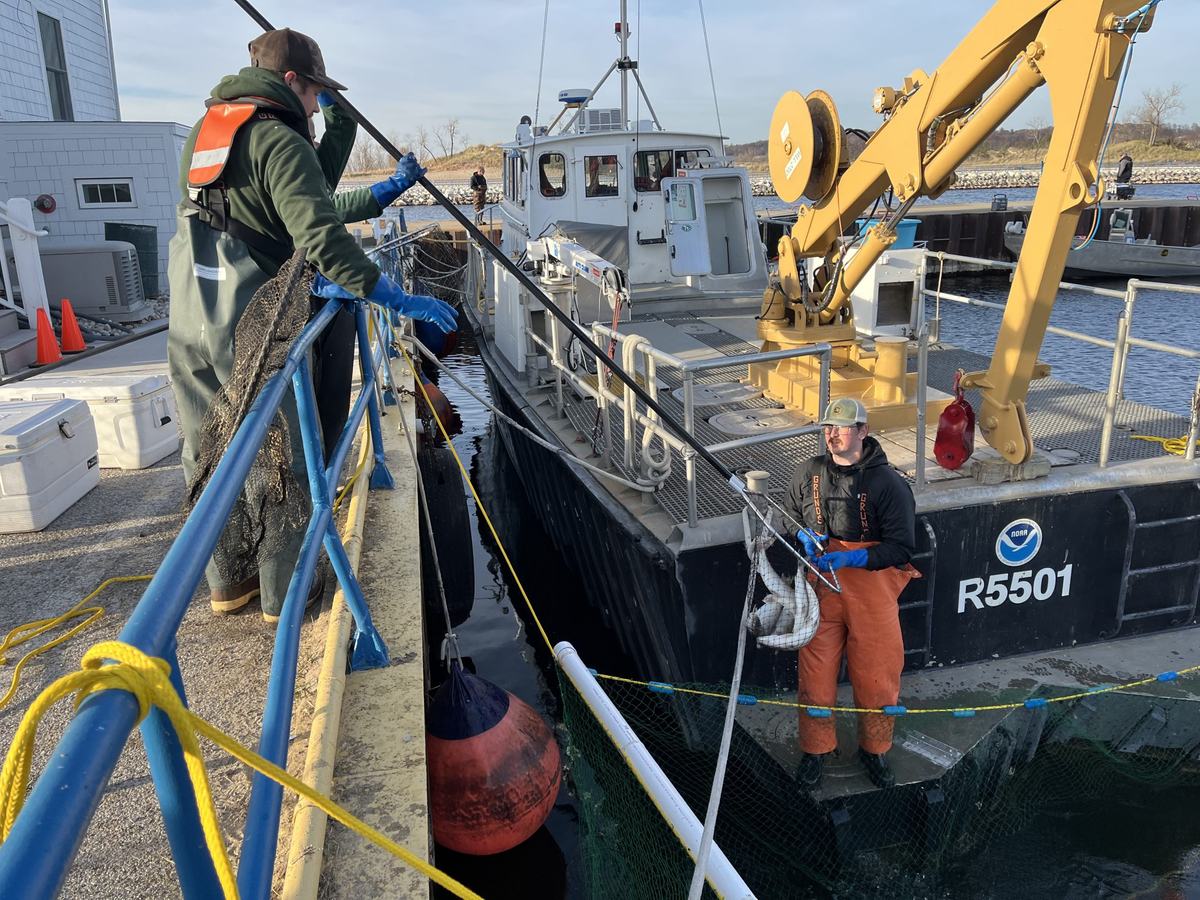
The effort began at a moment’s notice, after DNR officials heard reports that anglers were catching ripe whitefish off the breakwall where Muskegon Lake meets Lake Michigan.
That signaled that the fish, which normally stay in deep waters, have gone near shore to spawn. A crew of more than a dozen people rushed to the scene.
“It’s all hands-on-deck right now,” said Patrick Hanchin, who manages the state’s Charlevoix Fisheries Research Station. “Everybody who can help is here.”
Working out of a small boat in the Muskegon Channel, crews placed gillnets in the water for short increments, careful to retrieve the fish before they endured too much stress.
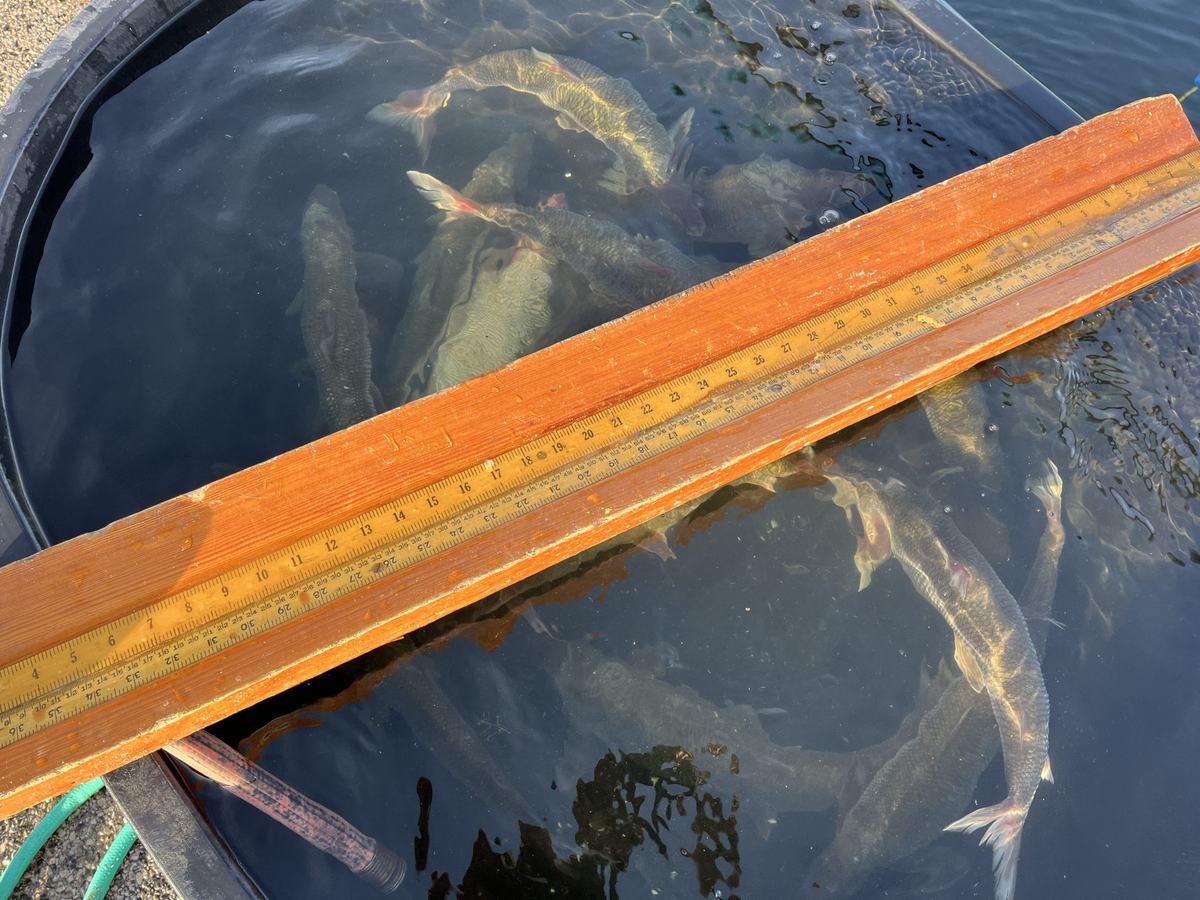
The fish were transferred into holding pens in the channel, before crews moved the fertile ones into large plastic tubs, keeping males and females separate.
State workers worked late in the night and into the following day, netting 40 fertile males and females to be spawned pair-by-pair and transferred to Wolf Lake.
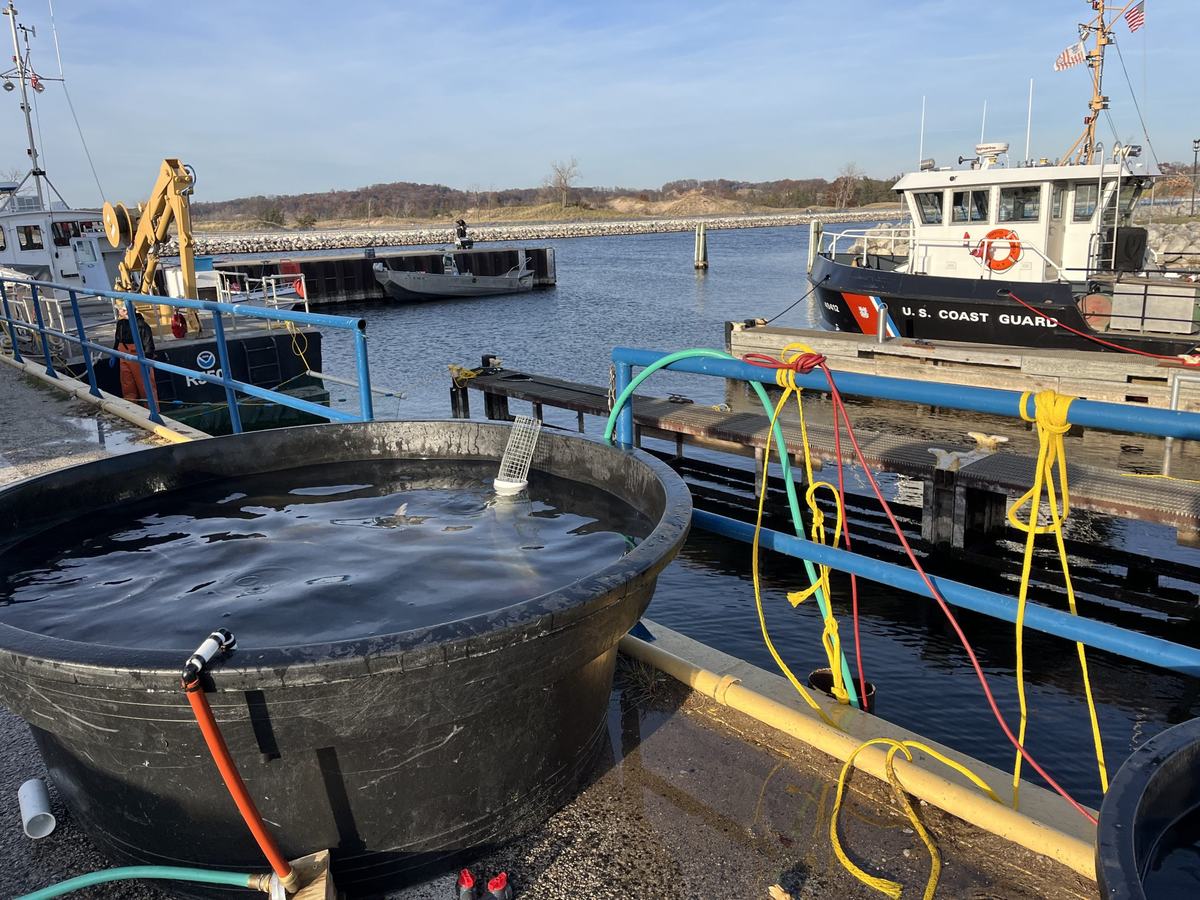
It could be a tough effort. The whitefish are believed to be about 20, making them elderly and lowering odds of reproducing.
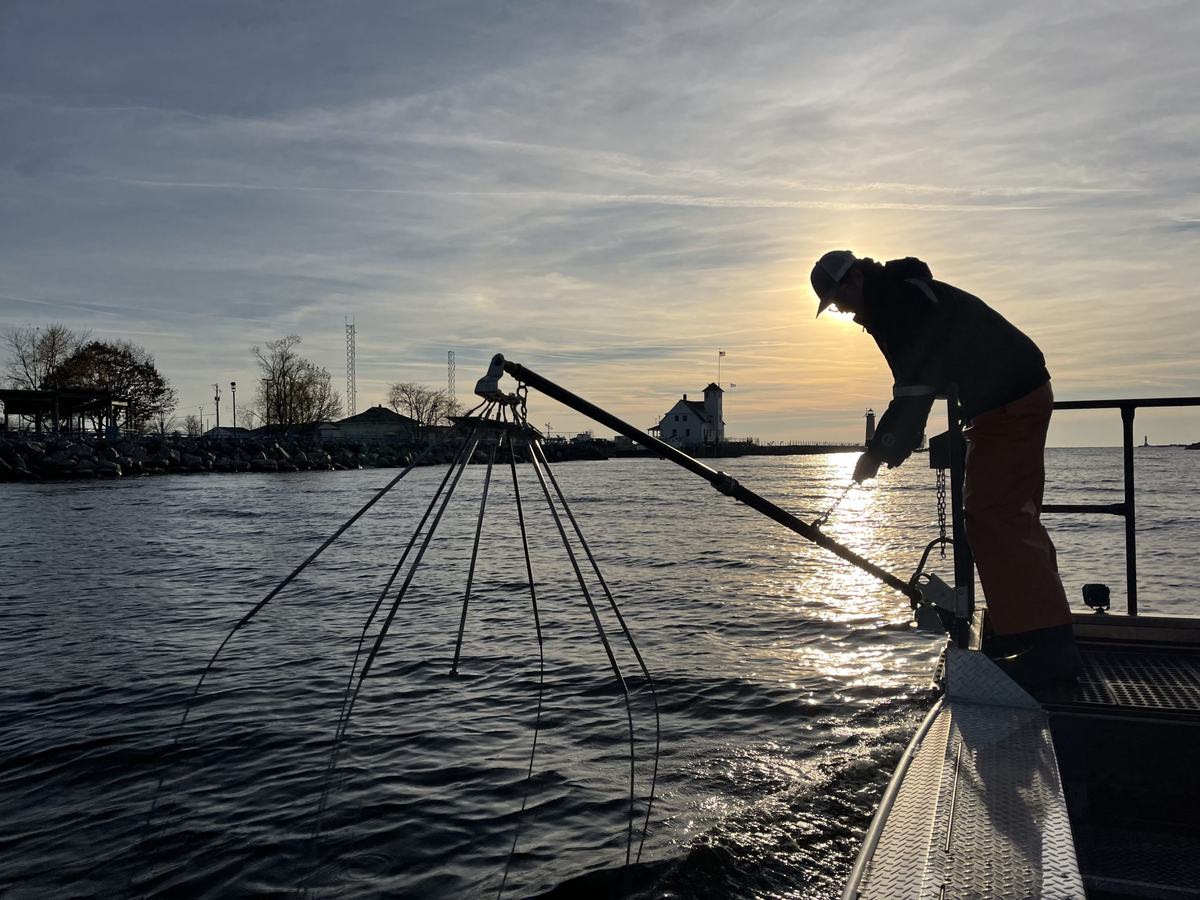
So crews tried not to stress out the fish. In some cases, they used “electrofishing,” shocking them briefly to render them unconscious, rather than snagging them in nets and making them struggle.
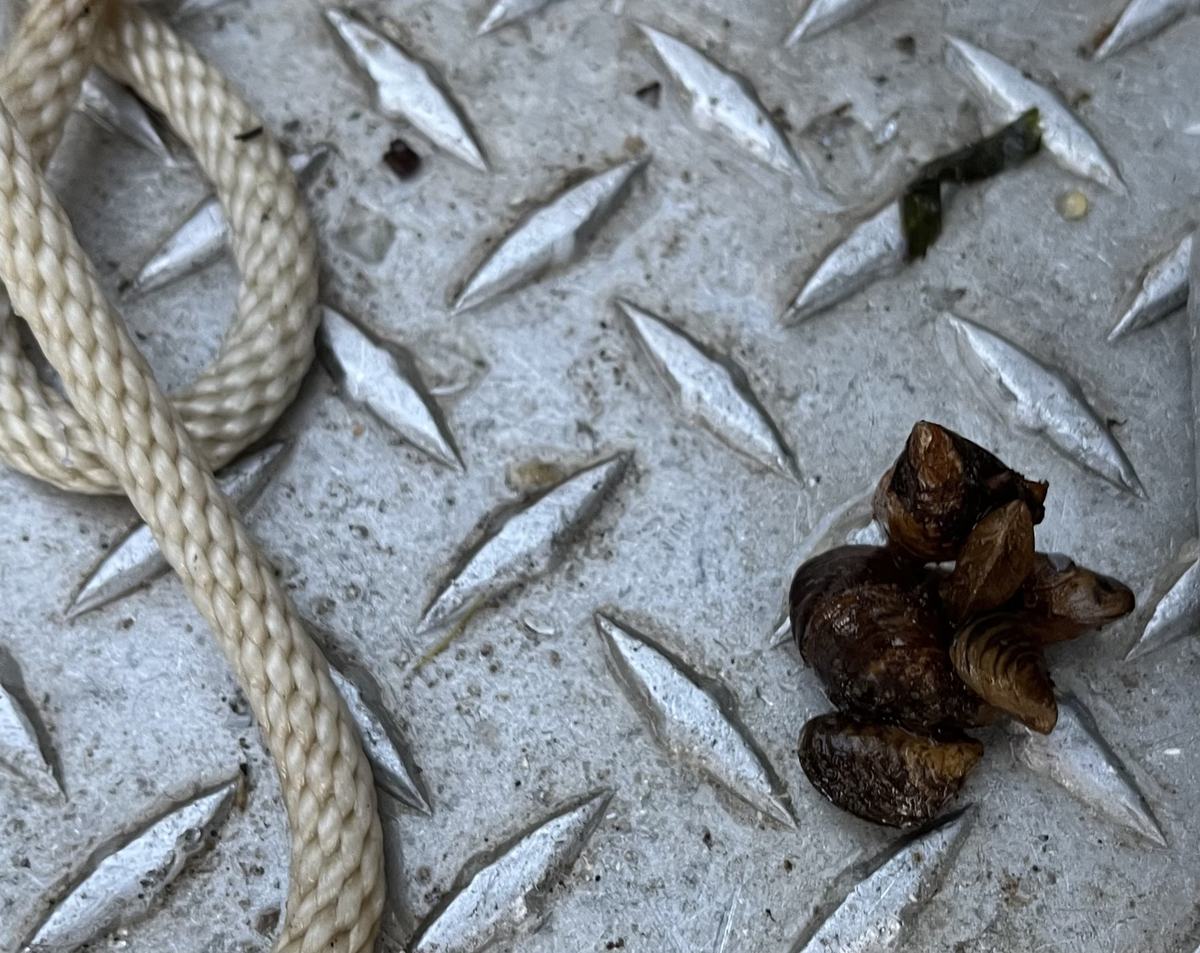
Along with fish, the nets hauled invasive mussels out of the water.
Voracious filter-feeders, the mussels have stripped the lower Great Lakes of plankton that are a key food source for baby whitefish and a host of other species.
The lakes’ magnificent clarity is a sign of an ecosystem largely devoid of life.
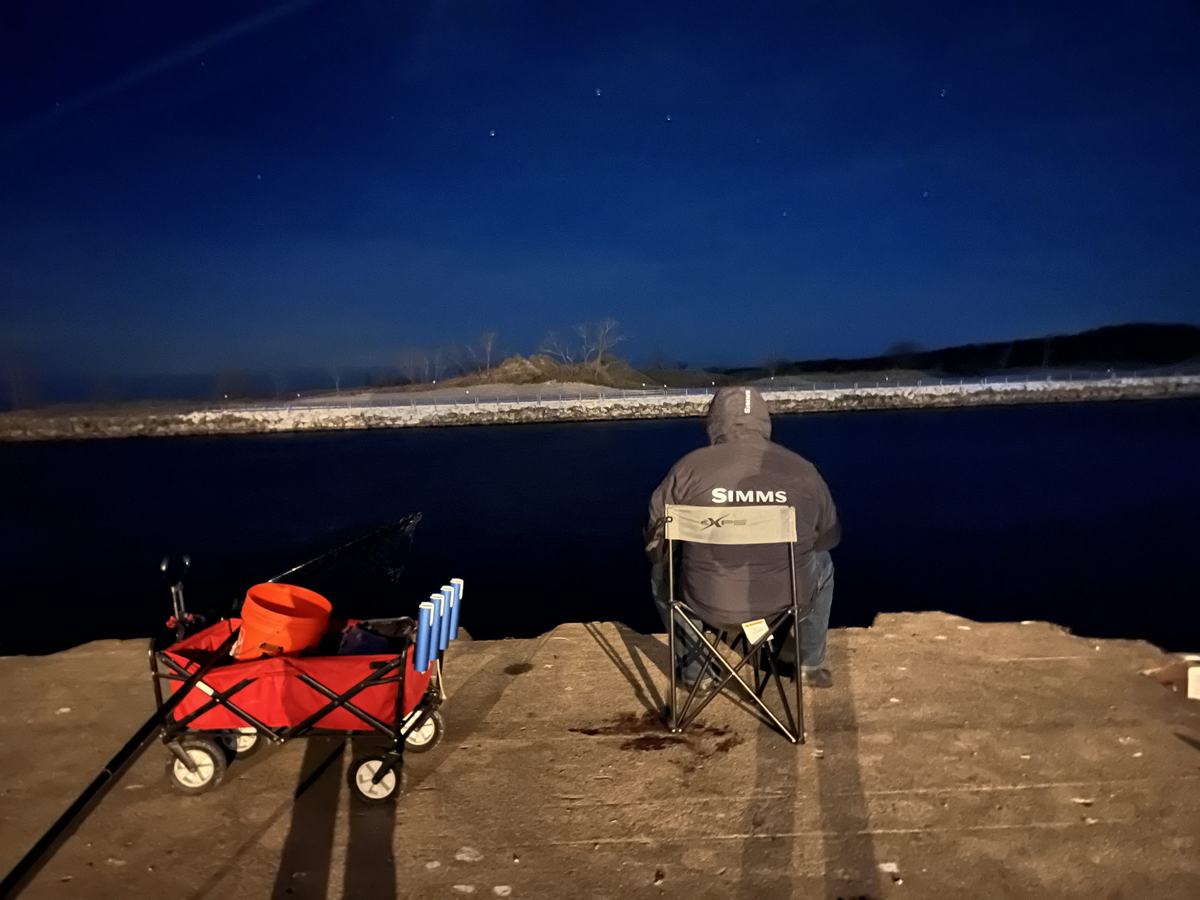
As the rescue unfolded nearby, Dennis LeMaire jigged for whitefish off the pier.
Back when whitefish were abundant, the docks would be packed nearly shoulder-to-shoulder with anglers during the fall spawning season, LeMaire said.
Now, it’s much lonelier.
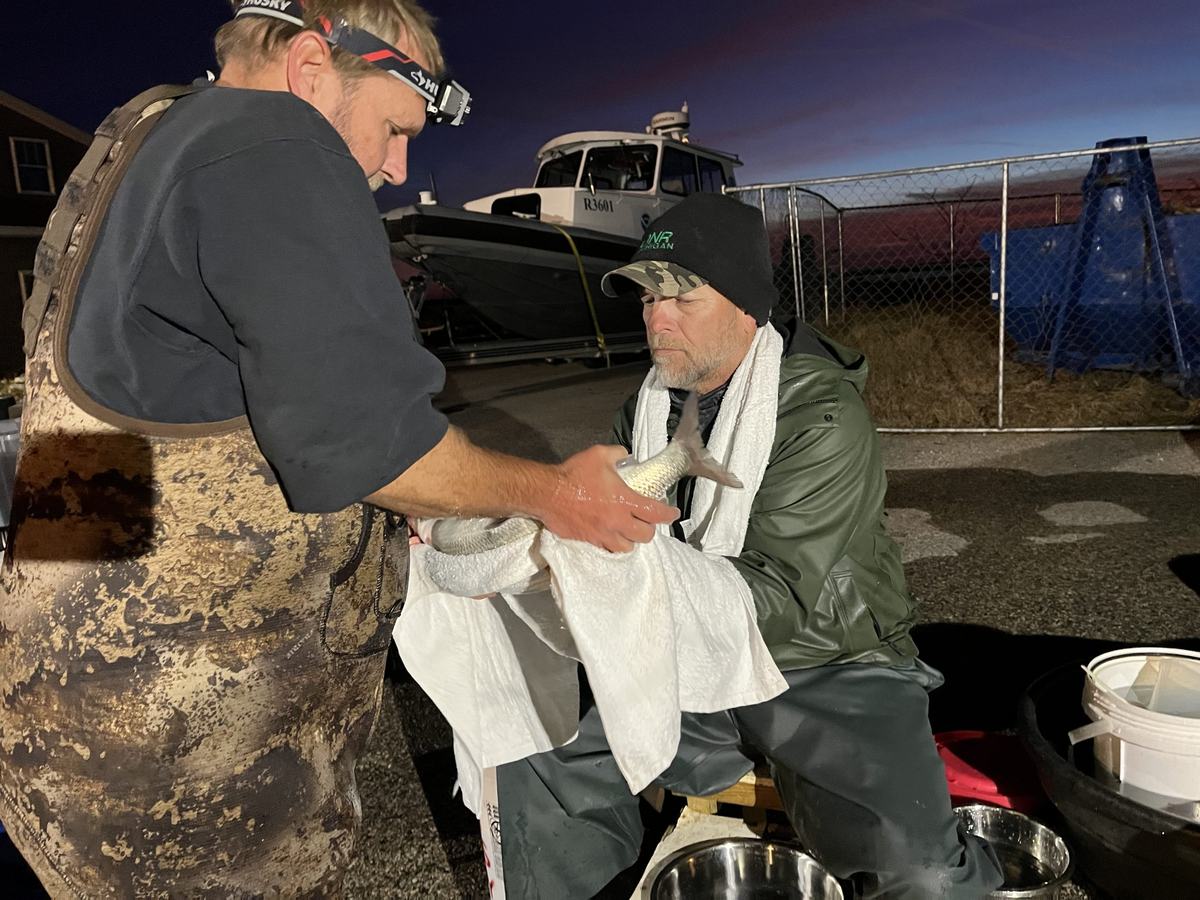
Once the fish were netted, Hughes — who hours earlier was working the phones for supplies — sprung into action to extract their eggs and sperm.
Water triggers fertilization, a process crews didn’t want to start prematurely. So the female fish were dried with a towel before Hughes pressed on their bellies to release thousands of eggs into a metal bowl.
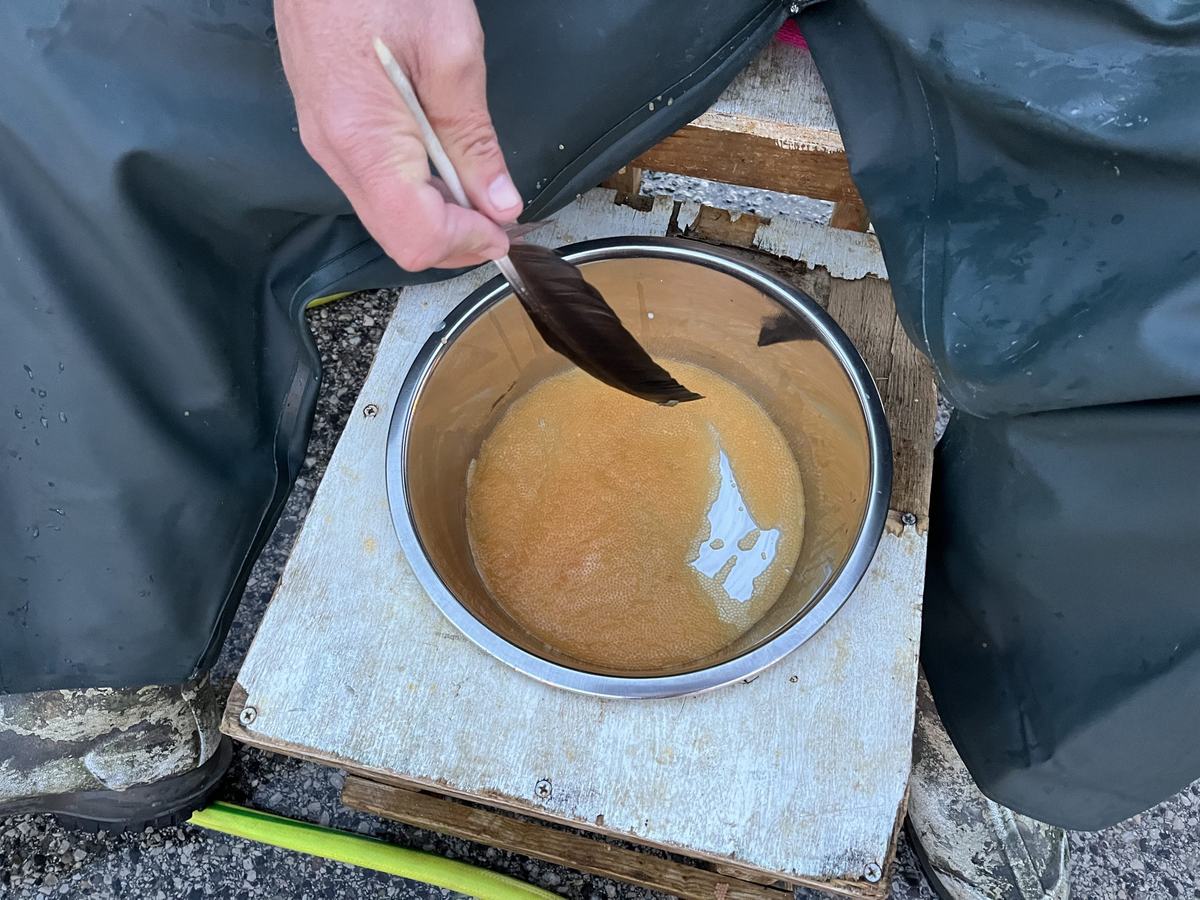
Next, a few drops of sperm were squeezed from a male fish, before Hughes used a feather to gently mix the gametes.
Water from the hatchery was then added to trigger fertilization.
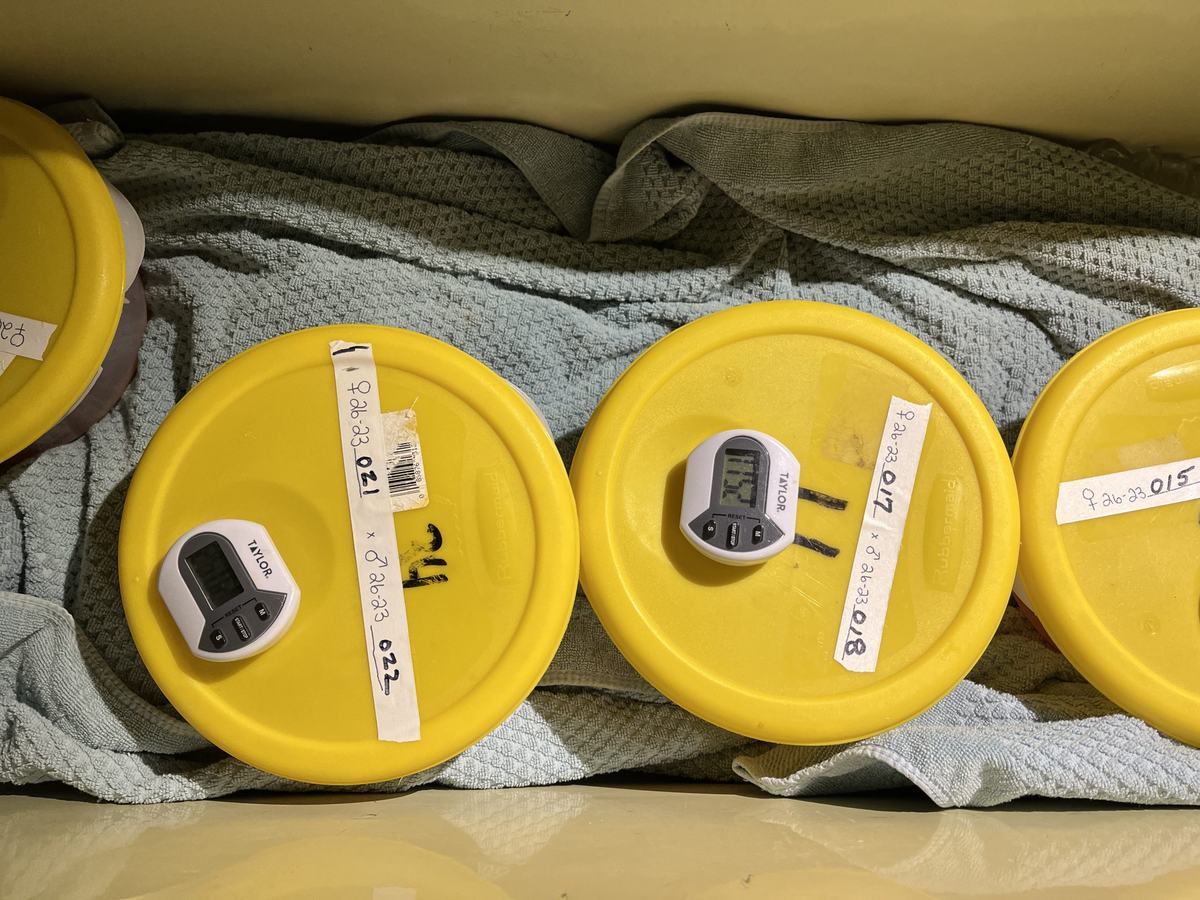
The fertilized eggs were transferred to a plastic container dosed with an iodine-based disinfectant, where they soaked for 30 minutes before being moved to a new container.
“That’s going to kill anything on the outside or inside of the egg that we don’t want in a hatchery,” Hughes said.
This process was repeated 40 times, with each set of eggs kept separate to avoid cross-contamination.
The parents die in the process. Their carcasses will be shipped to Michigan State University for a health analysis. Among other things, scientists will check for disease, alerting the state to any infected fish so their eggs can be discarded to keep the hatchery disease-free.
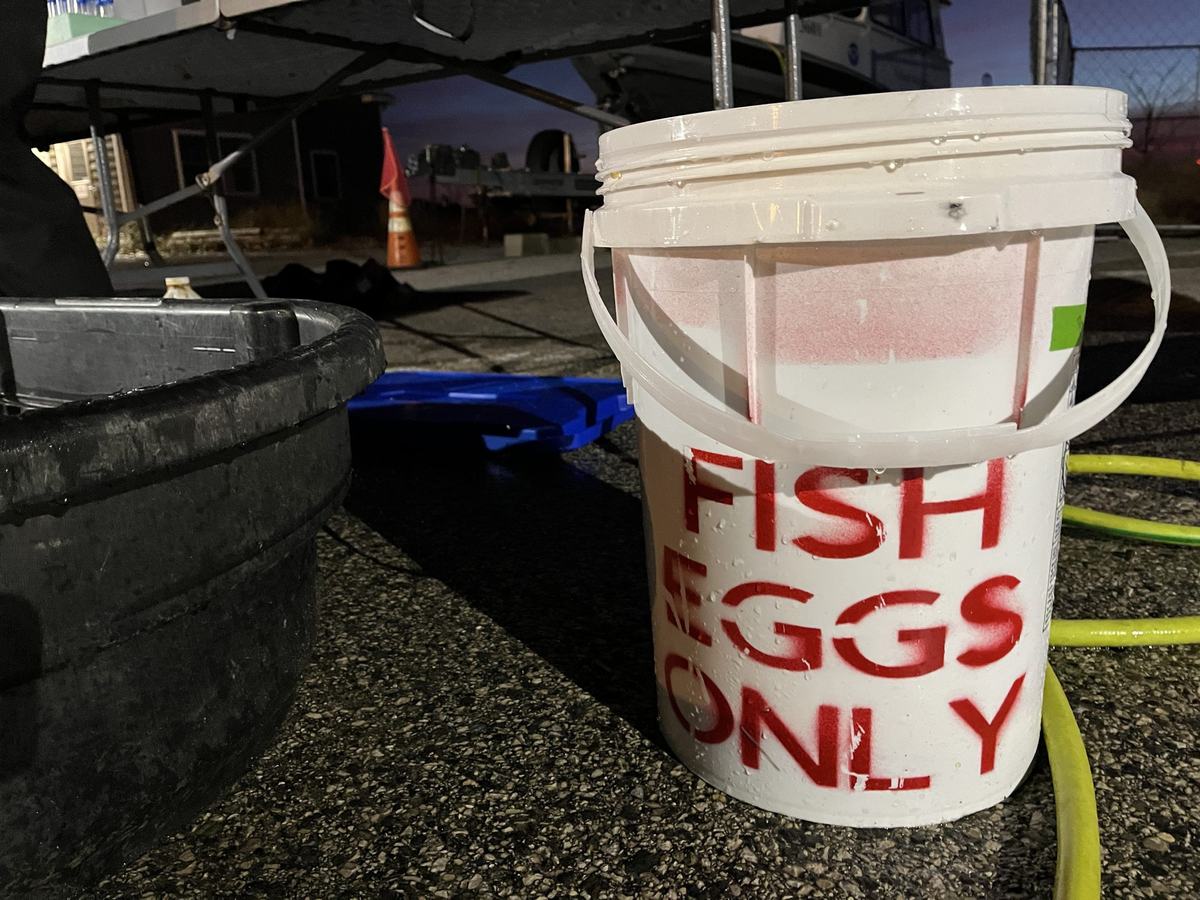
After fertilization, the crew had 24 hours until the developing eggs would become too delicate to be handled. So late at night, Hughes and colleagues drove to Wolf Lake hatchery to place them in cold water incubators where they’ll remain for the next several weeks.
“We just hope they do well in the hatchery,” Hanchin said.
One challenge: The state has little experience raising whitefish.
Michigan devotes little taxpayer money to fish and wildlife management efforts, instead funding it primarily with recreational hunting and fishing license dollars. In turn, the DNR has mostly devoted its hatcheries to game fish like salmon and walleye.
While recreational anglers target whitefish during the fall spawning run, the species is primarily considered a commercial catch.
So state officials looked to Michigan’s tribes for advice about the genetic rescue.
Several, including the Little Traverse Bands of Odawa Indians and Sault Ste. Marie Tribe of Chippewa Indians, have run experimental hatchery programs for years and have long advocated for the state and federal governments to devote more resources to whitefish recovery.
If and when the fish develop to the point that their eyes are visible through their egg shells, they’ll be moved to the Jordan River National Fish Hatchery in Elmira to continue growing.
For now, it’s not clear what will happen from there.
Ideally, officials say, at least some of them would remain in human care for years or even decades until the mussel invasion subsides, serving as a broodstock for future reintroduction efforts.
But current funding will cover only a couple of years of hatchery space, fish food and other expenses. And efforts to quell the Great Lakes mussel invasion – a necessary prerequisite to restoring wild whitefish stocks – are similarly short on funds.
Leaders of the rescue effort hope to recruit deeper-pocketed partners, such as neighboring states and the US and Canadian governments, to continue and expand the program.
“Fingers crossed,” Hanchin said.
Michigan’s collapsing whitefish
Bridge Michigan senior environment reporter Kelly House has written extensively about the whitefish crisis in the Great Lakes. Among the stories:
- Michigan’s iconic whitefish are disappearing
- Collapse erodes a bit of state’s identity
- 407 Michigan species on brink amid historic die-off
- Fish’s fate hinges on bid to kill mussels
- Research starved of funds as whitefish vanish
- Lake Superior survives the crisis — for now
- Time for a Noah’s Ark strategy?
- What are your whitefish memories, Michigan?
- Can whitefish learn to love rivers to survive?
- Experts: ‘We can’t regulate ourselves’ out of whitefish crisis
- Your whitefish questions answered
- Whitefish crash has Michigan fishers on the brink: ‘It makes you want to cry