

- Dozens of public officials across Michigan have faced recall efforts over their data center votes but only recall will appear on the November ballot
- Several of the recall efforts have failed because of problems with signatures or petition language
- Public officials say they have little power to prevent data center development
After 18 years on the Mason City Council, Elaine Ferris faces recall in November over a vote she says was intended to protect her city from data center development, not invite it.
Mason, in Ingham County near Lansing, began working on its zoning ordinance in late 2025 as state and federal officials pushed for more data center development. The goal, Ferris said, was to establish regulations before a developer arrived.
At least 28 officials across eight Michigan communities faced recall efforts over their handling of data center issues, according to a Bridge Michigan tally. But apparently only one official — Ferris — will face a vote on the November ballot that could remove her from office. Other recall efforts failed to reach the fall ballot because of problems with petition language or signature requirements.
The failed recall efforts highlight both the furor data center proposals have sparked among residents — in Marshall in Calhoun County, it led to “credible” death threats against the City Council — and the feeling among both residents and local government officials that they can’t stop the big tech companies from moving in.
“We have zero power to prevent this,” Ferris said.
“It’s disappointing because, you know, obviously, we believed in the effort,” said Aaron Rinehimer, a leader of a recall effort in Oakland County’s Lyon Township that missed the November ballot but is discussing next steps for the May ballot.
Sarah Mills, an associate professor of practice at the University of Michigan, said the intensity of the conflicts reflects a broader challenge in how communities handle controversial development.
She said residents often become most concerned when they believe a development will change the experience of living in their community. Noise, visual impacts, infrastructure and quality of life can become central concerns, she said.
Those concerns can become more intense when residents feel they were not involved early enough in the process.
Michigan’s planning and zoning system generally brings residents into the process after a developer has designed a project and submitted an application, Mills said. By then, residents may have fewer opportunities to substantially change the proposal.
“That’s one of the problems here,” Mills said.
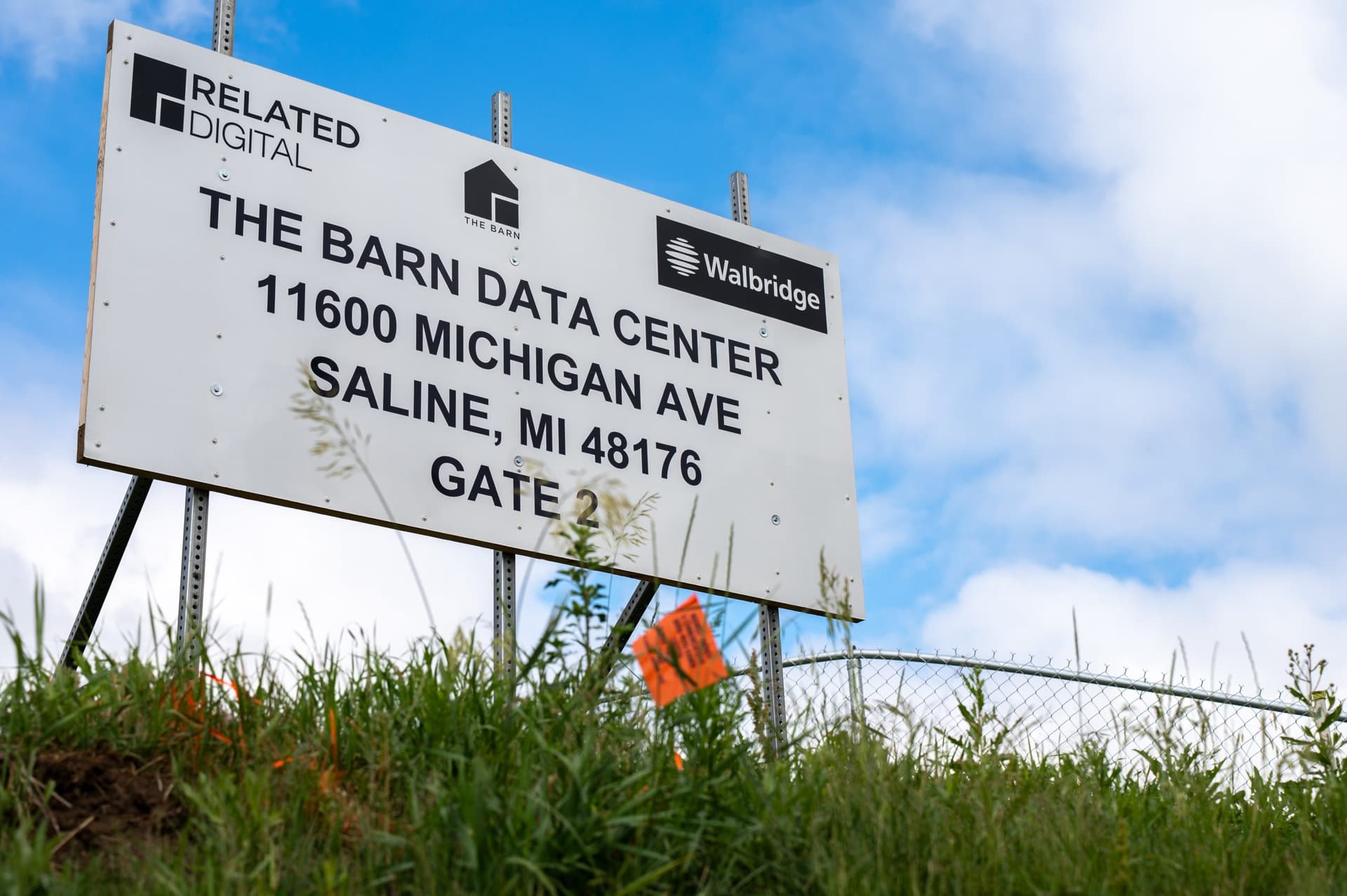
Local governments often have little power to change things, either, said Tom Hammond, the supervisor in Washtenaw County’s Saline Township, where Michigan’s first hyperscale data center, OpenAI and Oracle’s $7 billion The Barn, will be built.
After the township board initially voted against rezoning farmland for the project, the developers sued. The township settled rather than face the expensive legal battle. Hammond and others on the board faced an ultimately unsuccessful recall attempt over their support of the settlement.
“I would agree with that,” Hammond said when asked whether residents sometimes believe local officials have more power to stop data centers than they actually do.
Hammond said he did not take the recall effort personally, though he received hostile messages, including accusations that officials had accepted bribes.
“I never felt it was personal,” Hammond said. “I always felt like they thought that maybe the township needed to be going in a different direction.
Despite the controversy, Hammond said he believes the debate has increased civic engagement in the township. Meetings that once drew only a handful of residents now sometimes attract dozens of people, he said.
The data center conflicts cross traditional political lines, said Marjorie Steele, executive director of the anti-data center group Economic Development Responsibility Alliance of Michigan, which is tracking more than 34 communities involved in fights over proposed data centers. Residents from different political backgrounds are raising concerns about the same projects.
Mills, from the University of Michigan, said local governments can help alleviate some residents’ concerns by asking developers to make specific commitments about jobs, tax revenue and other benefits and put those commitments in writing.
“Very often, their neighbors are asking kind of, ‘What’s in it for me?,’” Mills said.
But for local officials, the growing backlash could have consequences beyond individual data center projects.
Mills said recall campaigns could result in communities losing experienced officials and could make residents less willing to serve on planning commissions or local boards.
“I think it could mean that we lose people with local government officials with a lot of experience,” Mills said.